



Statue Of Liberty Paris: Where To Find The City's Replicas
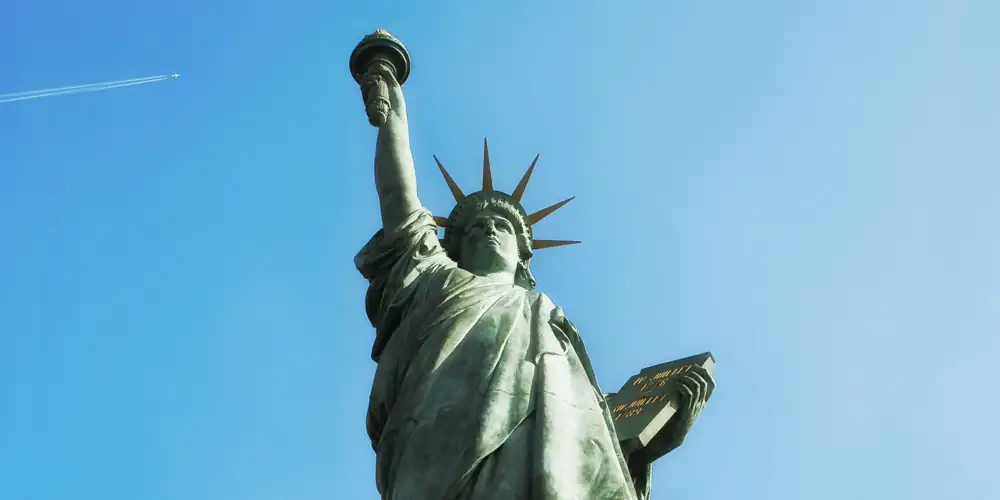 Statue of Liberty at Allée des Cygnes, photo by Mark Craft
The Statue of Liberty stands in New York Harbor, but its story begins in Paris. Frédéric Auguste Bartholdi designed the monument in France, Gustave Eiffel helped engineer its internal structure, and much of the work took place in Paris before the statue crossed the Atlantic in the 1880s.
Today you can find statues, models, and replicas across the city, from the quarter-scale monument on the Seine near the Eiffel Tower to smaller versions in museums and gardens. Together they trace the history of one of the world's most recognizable landmarks and the enduring connection between France and the United States.
How Many Statues Of Liberty Are There In Paris?
Paris is home to five notable Statues of Liberty. The best known stands on the Allée des Cygnes, a narrow island in the Seine near the Eiffel Tower. Other versions appear at the Musée des Arts et Métiers, Musée d'Orsay, Jardin du Luxembourg, and Pont de l'Alma, where the gold flame recalls the torch carried by the original monument.
The statues vary in size, age, and purpose. Some are connected directly to Bartholdi and the creation of the original monument, while others were presented to Paris later as symbols of Franco-American friendship. Together they form an unusual trail across the city that links museums, gardens, and riverside walks to one of the world's most recognizable landmarks.
Why Is There A Statue Of Liberty In Paris?
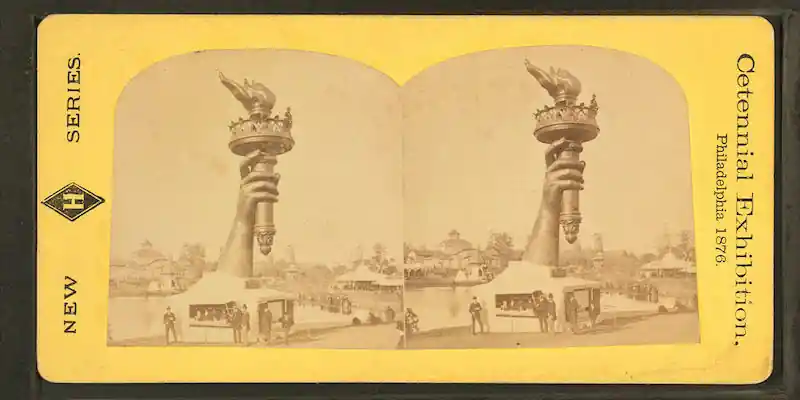 The hand and flame were the first parts of the statue to be created
The Statue of Liberty has deep roots in Paris. Frédéric Auguste Bartholdi designed the monument in France, much of the construction took place in Paris, and Gustave Eiffel helped engineer its internal structure. Before the completed statue was shipped across the Atlantic and assembled in New York Harbor, models, sections, and working versions appeared in Paris during fundraising campaigns and international exhibitions.
That history explains why several Statues of Liberty remain in the French capital today. Some are connected directly to Bartholdi's original work, while others were presented later as symbols of the long friendship between France and the United States.
Where To Find The Statues Of Liberty In Paris
1. Allée des Cygnes
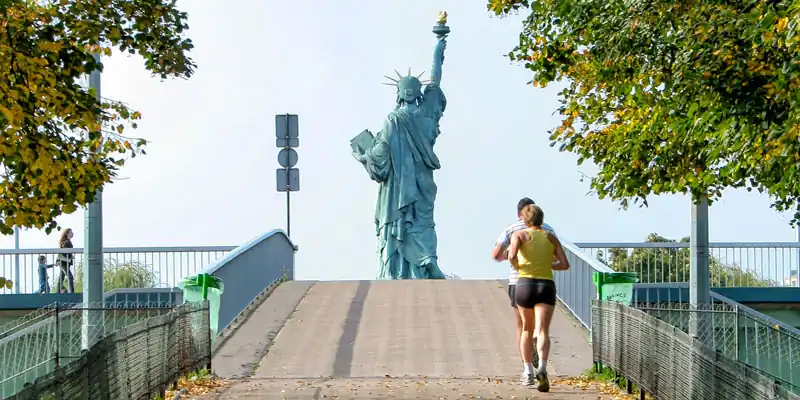 The approach to the Statue of Liberty on the Allée des Cygnes, photo by Mark Craft
The largest and best-known Statue of Liberty in Paris stands on Allée des Cygnes, a small, long, and narrow island in the Seine, downstream from the Eiffel Tower. It's here that you can find a ¼-scale model of Lady Liberty given to France by US expats in Paris in 1889 to celebrate the 100th anniversary of the French Revolution. Oh the base of the statue two plaques mention July 4, 1776 and July 14, 1789.
A tree-lined promenade stretches the length of the island between Pont de Bir-Hakeim and Pont de Grenelle. A walk here combines river views, the Statue of Liberty, and some of the closest views of the Eiffel Tower from the Seine.
2. Musée des Arts & Metiers
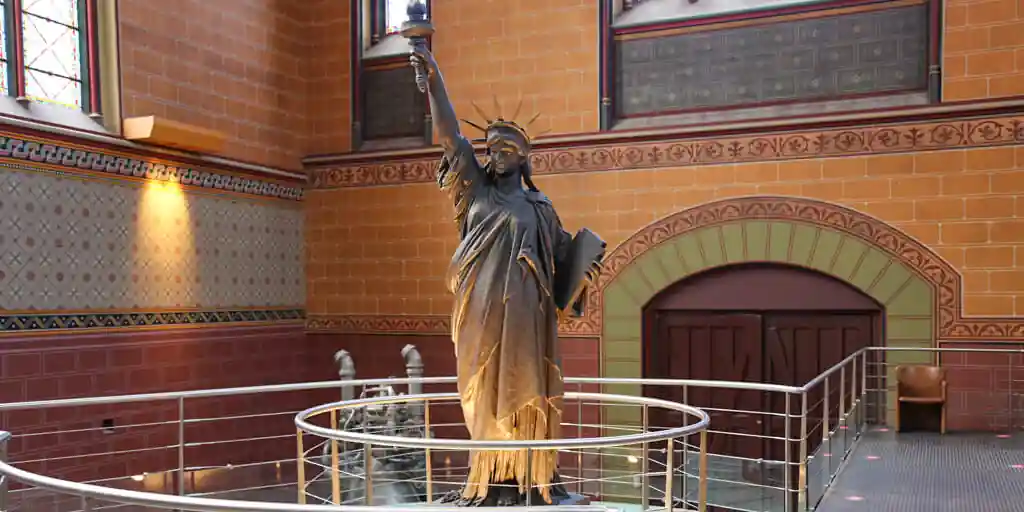 Statue of Liberty at Musée des Arts & Metiers
The Musée des Arts et Métiers, housed in the former Saint-Martin-des-Champs priory, holds one of the most important Statue of Liberty artifacts in Paris. Inside the museum is Bartholdi's original 1878 plaster model, created during the development of the monument that would later rise above New York Harbor.
The model stands just under three metres tall and dates from 1878, when Bartholdi was refining the design of the future monument. Donated to the museum by the sculptor's widow, it is one of the few original Statue of Liberty models that can still be seen in Paris. Learn more about the model on the Musée des Arts et Métiers website.
3. Musée d'Orsay
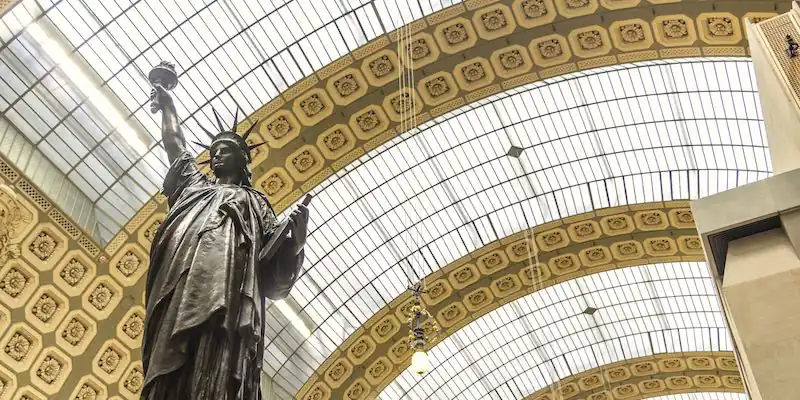 Statue of Liberty at Musée d'Orsay
In the center of the main floor, greeting you as you arrive at this fantastic Impressionist museum, is another copy of the Statue of Liberty. This is a small version, created by Bartholdi himself for the Paris Exposition Universelle of 1900. Bartholdi later donated the statue to the Musée du Luxembourg, which at the time housed 19th-century French art. It was later displayed in the Jardin du Luxembourg before moving to the Musée d'Orsay in 2014.
4. Jardin du Luxembourg
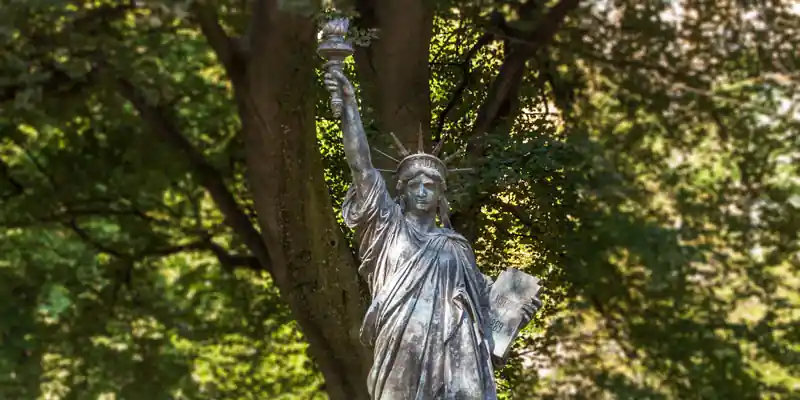 Statue of Liberty in Jardin du Luxembourg, photo by Mark Craft
But the Jardin du Luxembourg was not without its own Statue of Liberty for very long. American residents of Paris donated this replica to the city, continuing a tradition of Franco-American commemorations associated with the Statue of Liberty.
This Statue of Liberty stands in front of an oak tree. Beneath is a plaque that reads: "This American oak is dedicated to the memory of the victims of September 11, 2001 in the United States of America. Gift of the American community of Paris as a symbol of Franco-American friendship by M. Christian Poncelet, President of the French Senate in the presence of Honorable Howard Leach, Ambassador of the United States of America to France."
5. Pont de l'Alma
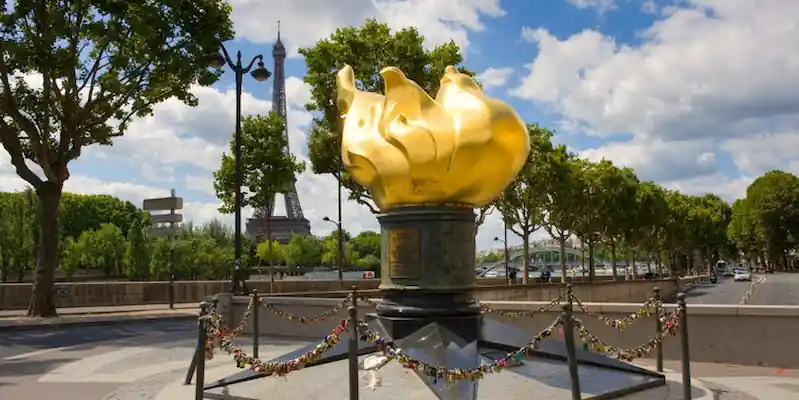 The golden flame of Liberty at Pont de l'Alma
On the Right Bank side of this bridge, which provides a clear view of the Eiffel Tower, is a replica of the gold flame that tops the Statue of Liberty. This was given to Paris in 1986 to celebrate the 100th anniversary of the dedication of the statue in New York Harbor. Today, many think of this as a memorial to Princess Diana, who was killed in a crash in the tunnel that runs beneath the bridge at this point in 1997. Flowers and other mementos dedicated to her can still be found here.
A Short Chronicle of the Statue of Liberty
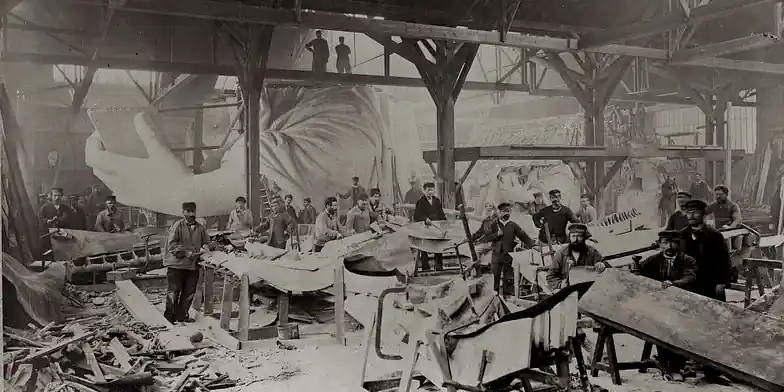 Statue of Liberty Workshop, photo U.S. Library of Congress
French sculptor Frédéric Auguste Bartholdi conceived and designed the Statue of Liberty. He first became interested in the idea after a conversation in 1865 with French politician Édouard de Laboulaye, who suggested that France commemorate American independence with a monument celebrating liberty and democracy.
Bartholdi was inspired by the idea and in the mid 1870s, before a statue was even designed, he created the head of a proposed statue along with an arm holding a torch. During the next decade Bartholdi promoted the project in both countries while trying to raise funds. The statue's monumental head was displayed at the Exposition Universelle held in Paris in 1878, while the arm holding the torch was shown at the US Centennial International Exhibition of 1876 in Philadelphia. (Shown in the photo above.)
With money raised and an island in New York Harbor made available, Bartholdi recruited the workshop of Gustave Eiffel to construct the internal structure for the 46-metre-high statue. Eiffel created an innovative double skeleton that would allow the statue to move in the wind and expand in heat without the skin cracking.
Bartholdi built the entire statue and then disassembled it for transportation and rebuilding on Liberty Island, where it was dedicated in 1886.
The statue itself was created in the metalwork foundry of Gaget, Gauthier & Co, located at 25 Rue de Chazelles in the 17th Arrondissement, a short walk from Parc Monceau. The foundry disappeared long ago, replaced by a modern building, but a commemorative plaque marks the site where one of the world's most recognizable monuments took shape. Inside the medical offices of La Clinique du Parc Monceau, a small cast replica of the statue remains on display.
Frequently Asked Questions
DOES FRANCE HAVE A STATUE OF LIBERTY?
Yes. France has several Statues of Liberty, including the best-known replica on the Allée des Cygnes in Paris. The monument has deep French roots, since sculptor Frédéric Auguste Bartholdi designed it in France and Gustave Eiffel helped engineer its internal structure.
WHERE IS THE STATUE OF LIBERTY IN PARIS?
The largest Statue of Liberty in Paris stands on the Allée des Cygnes, a narrow island in the Seine near the Eiffel Tower. Smaller versions can also be found at the Musée des Arts et Métiers, Musée d'Orsay, Jardin du Luxembourg, and Pont de l'Alma.
HOW MANY STATUES OF LIBERTY ARE THERE IN PARIS?
Paris has five notable Statues of Liberty and related replicas. They range from the quarter-scale monument on the Seine to smaller versions displayed in museums and gardens across the city.
WHY IS THERE A STATUE OF LIBERTY IN PARIS?
The Statue of Liberty was designed and built in France before being shipped to New York in the 1880s. Several replicas remain in Paris because of the monument's French origins and the long friendship between France and the United States.
Continue Planning Your Paris Visit
Where To Stay In Paris →
Paris Neighborhoods →
How Many Days In Paris →
Paris For First-Time Visitors →
City of Paris: Events & News →

Find Your Paris Hotel: Choosing The Right Area
Wake up near the cafés of Saint-Germain, the streets of the Marais, or the village lanes of Montmartre. Find a Paris hotel in the neighborhood you want to call home.