


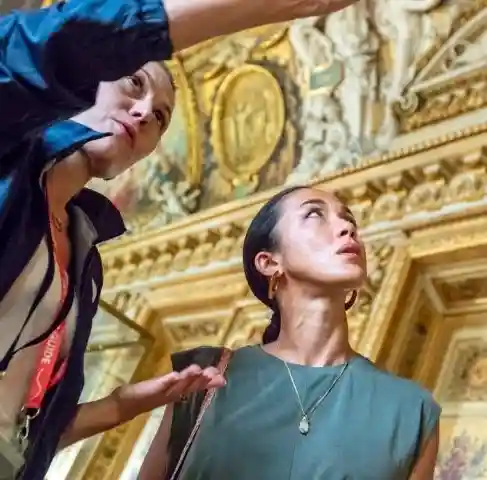





Mona Lisa In The Louvre: What To Know Before You Visit
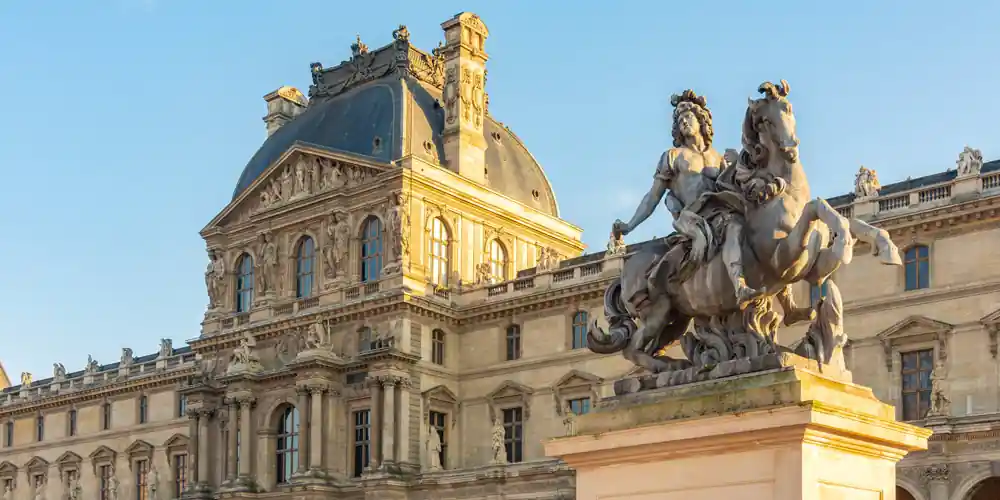
The Mona Lisa is the most famous painting in the Louvre and one of the most recognizable works of art in the world. Painted by Leonardo da Vinci in the early 16th century, the portrait attracts millions of visitors each year to the museum's Denon Wing. For many people, seeing the Mona Lisa is one of the main reasons for visiting the Louvre.
The painting's fame brings a challenge. The Mona Lisa is displayed behind protective glass and surrounded by large crowds throughout the day. Seeing the Mona Lisa requires a little planning, whether your goal is to see the painting up close, learn more about its history and make the most of your time in the Louvre Museum.
How to See the Mona Lisa at the Louvre
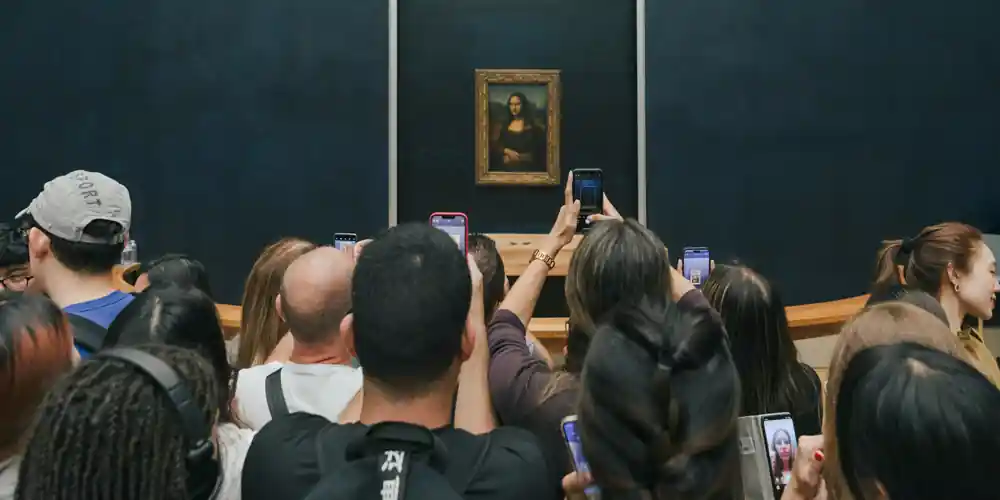
Seeing the Mona Lisa requires a little planning. The painting is displayed in the Louvre's Denon Wing and attracts large crowds throughout the day. Arriving with a plan will make the experience more enjoyable and help you make better use of your time in the museum.
BOOK A GUIDED TOUR
A small-group or private tour of the Louvre is the easiest way to see the Mona Lisa while learning more about the painting and the museum's collection. It also reduces time spent in ticket lines and navigating one of the world's largest museums.
MANAGE YOUR EXPECTATIONS
The Mona Lisa is displayed behind bulletproof glass and attracts a steady flow of visitors. Start by admiring Mona from afar and then slowly make your way for a close-up view. Take your time to remember the moment while respecting other art lovers.

The History of the Mona Lisa

Leonardo da Vinci painted the Mona Lisa in the early 16th century. The model, Lisa Gherardini, was the wife of Florentine merchant Francesco del Giocondo. Leonardo used techniques such as sfumato, subtle layers of shading that helped create the soft transitions and lifelike qualities for which the painting became famous.
The painting arrived in France during the reign of King Francis I. It spent centuries in royal collections before becoming part of the Louvre following the French Revolution. Today it occupies a dedicated gallery in the museum's Denon Wing.
The theft of the Mona Lisa in 1911 transformed the painting's public profile. An Italian museum employee removed the work from the Louvre and kept it hidden for more than two years before it was recovered. The international publicity surrounding the theft helped turn the Mona Lisa into a household name.
Questions That Still Surround the Mona Lisa
The Mona Lisa's smile continues to generate debate. Art historians, scientists, and psychologists have studied the expression for centuries, proposing explanations that range from Leonardo's painting techniques to the way the human eye processes subtle changes in light and shadow.
Some questions extend beyond the portrait itself. Researchers have long debated whether the landscape behind Mona Lisa depicts a real location. Some scholars point to the Arno River Valley near Florence, while others argue that Leonardo combined elements from several places into an imagined landscape.
Most historians accept that the painting depicts Lisa Gherardini, the wife of a Florentine merchant. Alternative theories have proposed noblewomen, mistresses, and other subjects over the years, but they have gained little support among art historians.
Few works of art generate as much public interest as the Mona Lisa. From the famous 1911 theft to more recent protest actions directed at the protective glass surrounding the painting, the work continues to attract attention far beyond the art world.
A New Home for the Mona Lisa at the Louvre
 President Macron announcing Louvre renovation plans
The Mona Lisa is going to have a space of her own within the Louvre . In 2025, President Emmanuel Macron announced plans to relocate the painting to a dedicated gallery designed specifically for the millions of people who come to see it each year. The move would represent the biggest change to the Mona Lisa's presentation in decades.
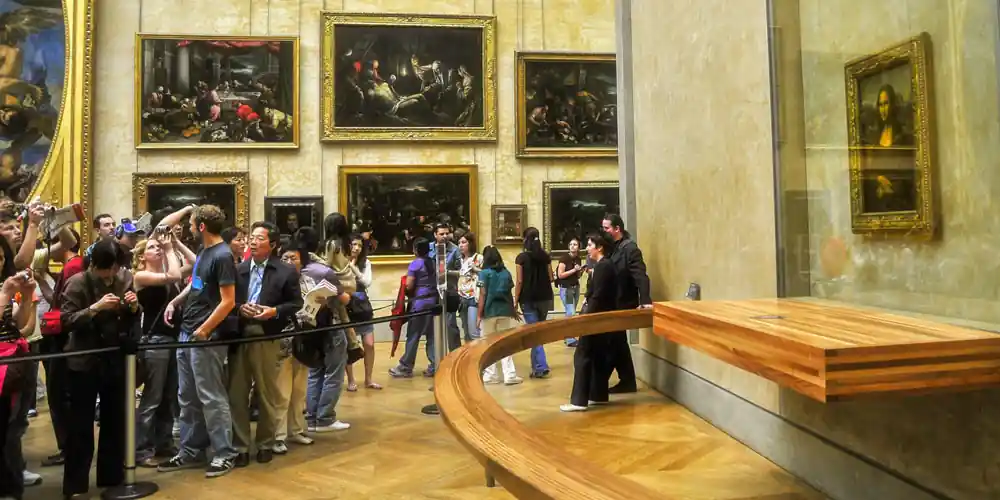
The painting's current gallery is one of the busiest spaces in the museum. Visitors gather many rows deep behind barriers and protective glass, often competing with hundreds of others for a clear view. A dedicated gallery would allow the Louvre to rethink how people encounter its most famous work.
The project could also reshape how visitors experience the museum itself. Louvre officials have discussed separate access and ticketing options for visitors whose primary goal is to see the Mona Lisa, a change that would have been difficult to imagine only a few years ago.
The plans remain several years away, but they signal an important shift. For generations, seeing the Mona Lisa has meant joining the crowds in the Salle des États. Future visitors may encounter the painting in a very different setting.
See More Of Paris's Great Museums →
Planning Your Visit
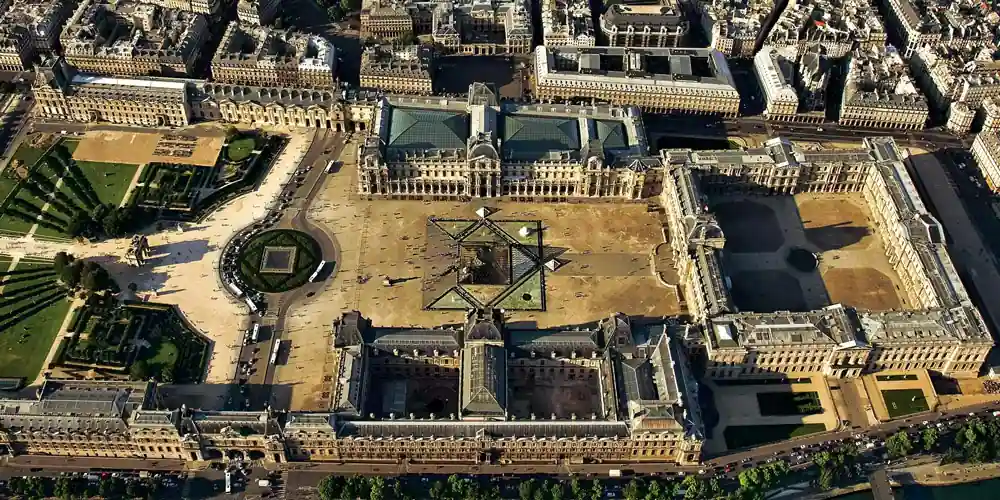 The Louvre palace and museum seen from above, photo Musée du Louvre
- The Mona Lisa is displayed in the Salle des États (Room 711) on Level 1 of the Denon Wing.
- The Louvre receives millions of visitors each year, and the Mona Lisa remains its biggest draw.
- There are three public entrances to the Louvre: the Pyramid, the Carrousel entrance, and the entrance at 99 Rue de Rivoli.
- The Louvre is closed on Tuesdays, January 1, May 1, and December 25.
Continue Planning Your Paris Visit
Where To Stay In Paris →
Paris Neighborhoods →
How Many Days In Paris →
Paris For First-Time Visitors →
City of Paris: Events & News →

Find Your Hotel In France
Sleep among the vineyards, beside the Mediterranean, or in the heart of a historic French city. Find highly-rated hotels for your travels beyond Paris.