








Where To Stay In Paris: Choosing The Right Area
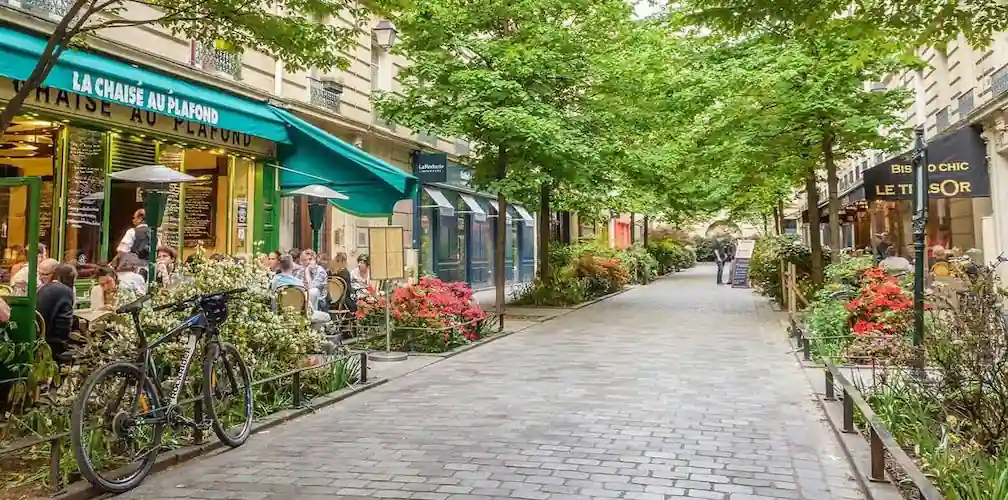
Paris isn't one place when you're choosing where to stay. The Marais, Saint-Germain, Montmartre, and the Left Bank each feel distinct once you're on the ground, and the differences show up quickly in how easy it is to get around and what you find just outside your hotel.
This guide explains the main areas to consider and how each one works once you're there, from compact neighborhoods you can walk easily to broader areas with better Metro access. From here, you can explore our hotel guides for each neighborhood to compare locations and decide where to stay.
The Marais
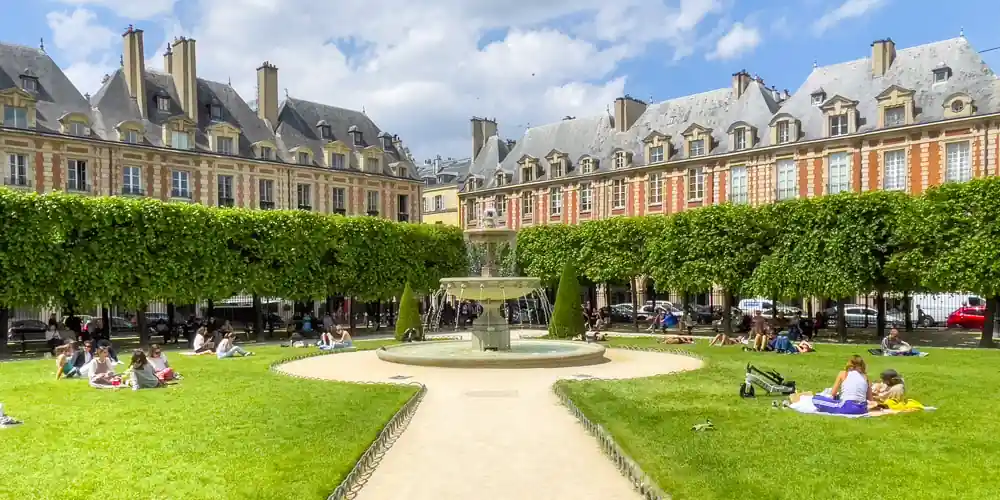 Place des Vosges in the Marais, photo by Mark Craft
The Marais is one of the easiest parts of Paris to use as a base because the streets are compact, the landmarks come quickly, and much of what you want during the day is already close at hand. Museums, food shops, cafés, and small boutiques sit side by side, and the old street pattern gives the neighborhood a texture that feels distinctly Paris rather than interchangeable with anywhere else.
A stay here works especially well if you like moving around on foot and having plenty to do before you ever get on the Metro. The Marais suits visitors who want a central location with energy, history, and enough daily life on the streets to make the neighborhood feel active from morning into the evening.
Saint-Germain-des-Prés
 Saint-Germain-des-Prés at night, photo by Mark Craft
Saint-Germain-des-Prés has a more settled and polished feel than some other central neighborhoods, with cafés, galleries, bookshops, and handsome streets arranged in a way that feels easy to understand once you arrive. It is one of those parts of Paris where the setting itself does a lot of the work, and where even a short walk can take you past places that have defined the Left Bank for generations.
This area makes sense for visitors who want a classic Left Bank stay with a strong sense of identity and a convenient position near the Seine, museums, and the Luxembourg Gardens. It is a good choice if you want to walk a great deal during the day, then return to a neighborhood that still feels composed and recognizably Paris in the evening.
Latin Quarter
 Storefronts & city life in the Latin Quarter
The Latin Quarter feels older, busier, and less mannered than Saint-Germain, with a tighter web of streets running around the Sorbonne, the Panthéon, and the slope down toward the river. Student life still shapes the area, and that gives it a more informal character, with practical cafés, bookshops, everyday commerce, and a steady movement of people through the streets from morning onward.
For many visitors, the appeal is simple: you are central, you can walk to major sights, and hotel prices can be a little less forbidding than in Saint-Germain. The Latin Quarter suits travelers who care more about location and day-to-day convenience than polish, and who are happy in a neighborhood that feels active, useful, and visibly lived in.
Marais Walking Tours
Walk the Marais with a local guide through historic streets, hidden courtyards, markets, and food shops, with tours that delve into the neighborhood’s history and food.
Left Bank
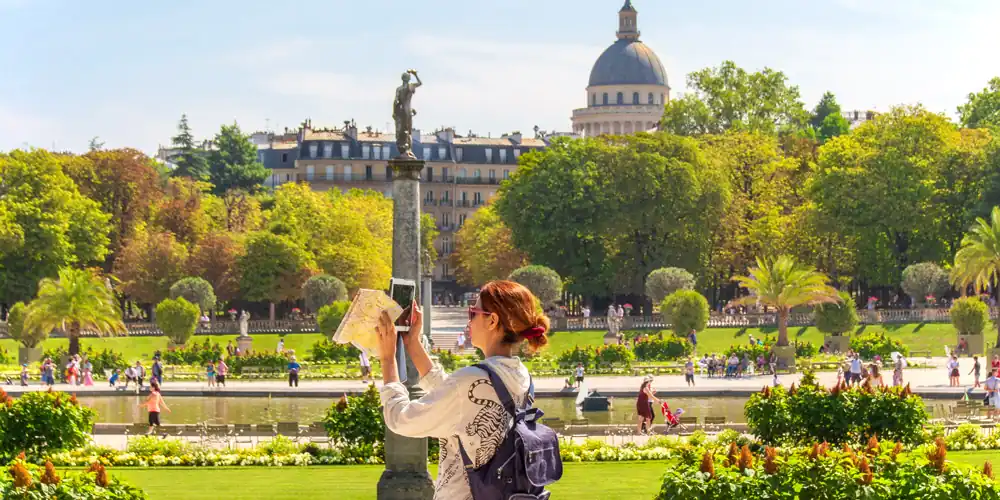 Jardin de Luxembourg is on the Left Bank
The Left Bank is broader than the individual neighborhoods above, which is part of its appeal. Rather than one tightly defined pocket, it gives you a wider choice of streets, hotel styles, and daily rhythms, from busier areas near the river to calmer stretches farther south. That flexibility makes it useful for visitors who know they want the Left Bank atmosphere without feeling limited to one small section of it.
Because the area covers more ground, the exact hotel location matters more here than it does in the Marais or Saint-Germain. The Left Bank suits travelers who want room to choose between livelier and quieter surroundings, and who like the idea of staying in a part of Paris that still gives them cafés, museums, markets, and good transport without pressing them into the busiest center.
Montmartre
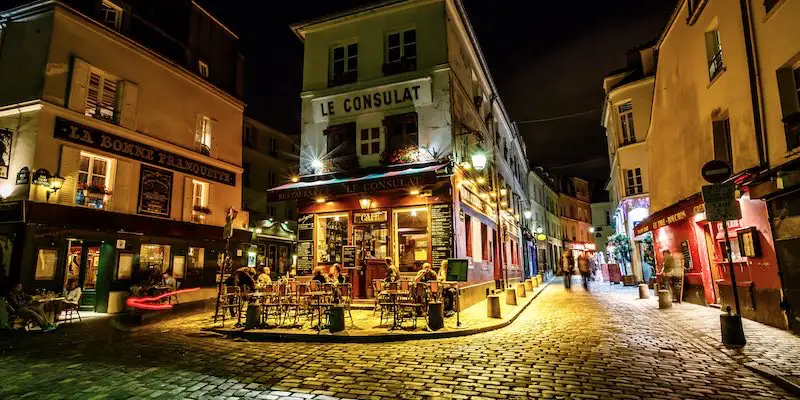 Cafe Le Consulat in Montmartre
Montmartre feels separate from the rest of Paris in a way that is immediately obvious once you start walking its streets. The hill, the stairways, the small lanes, and the views over the rooftops all give it a different physical character, and the neighborhood still carries some of the feel of the village it once was. That difference is exactly why many visitors are drawn to stay here.
A hotel in Montmartre works best for travelers who want atmosphere first and are comfortable planning their routes a bit more deliberately. You are farther from the main sights along the Seine, but in return you get a part of Paris with a strong identity, memorable views, and streets that feel unlike anywhere else in the city.
Near The Eiffel Tower
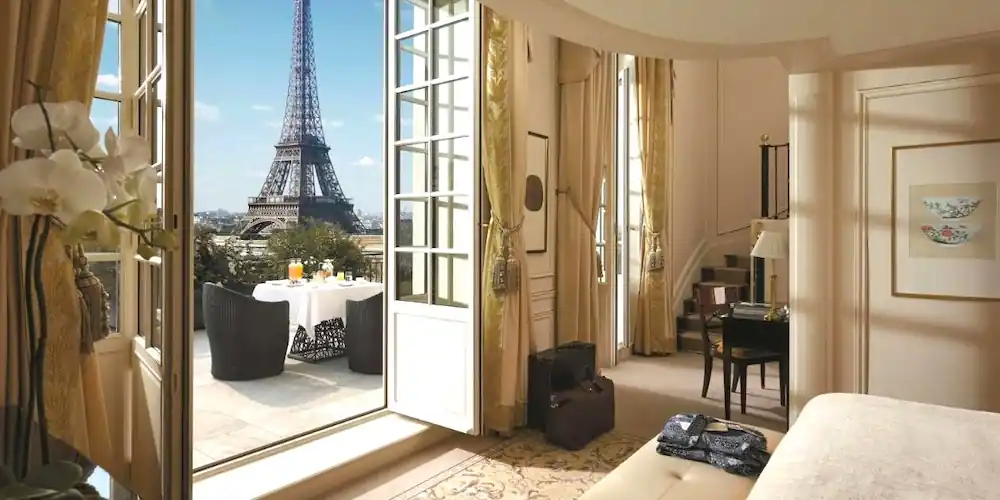 Eiffel Tower views at hotel Shangri-La Paris
The area around the Eiffel Tower offers a very recognizable version of Paris, with broad avenues, handsome residential streets, classic buildings, and a position close to the river that keeps some of the city's most famous views within easy reach. It may be anchored by the monument, but it is not just a sightseeing zone. This part of the city also has its own daily rhythm, with markets, cafés, and elegant streets that make it feel fully part of Paris life.
This suits first-time visitors especially well, but it is not only for them. It also works for anyone who wants a handsome, well-ordered part of Paris with strong transport links and easy access to the Right Bank and Left Bank alike. If being near the Eiffel Tower is part of the appeal, this area lets you keep that advantage without giving up the feeling of staying in the city itself.
FAQs About Where to Stay in Paris

WHICH AREA IS BEST FOR A FIRST VISIT TO PARIS?
Most first-time visitors choose the Marais or Saint-Germain-des-Prés because both are central, easy to walk, and close to major sights. The Eiffel Tower area is another strong option if proximity to the landmark is important.
IS IT BETTER TO STAY ON THE LEFT BANK OR RIGHT BANK?
The Left Bank tends to feel more residential and spread out, while areas on the Right Bank, including the Marais, are often more compact and easier to navigate on foot. The choice depends on whether you prefer a quieter base or a more concentrated setting.
WHICH AREAS ARE EASIEST TO GET AROUND FROM?
The Marais, Saint-Germain-des-Prés, and the Latin Quarter all offer strong central locations with good walking access and transport connections. Montmartre is slightly farther out but still manageable with the Metro.
HOW CLOSE DO I NEED TO STAY TO THE MAIN SIGHTS?
In central Paris, you don’t need to be right next to every landmark. Areas like the Marais, Saint-Germain-des-Prés, and the Latin Quarter already place you within walking distance of several major sights, with Metro connections filling in the rest. It’s usually more useful to choose a neighborhood you enjoy than to focus on one specific attraction.
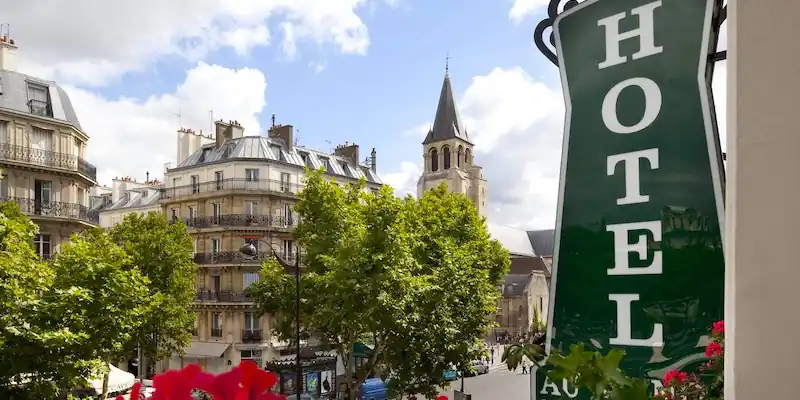
Find Your Hotel In France
Sleep among the vineyards, beside the Mediterranean, or in the heart of a historic French city. Find highly-rated hotels for your travels beyond Paris.