








Guide to Paris Train Stations: Routes, Locations & Use
Paris is known for its slower pace — cafes, walks along the Seine, time taken over a meal. The train stations show a different side of the city: large, busy, and built for movement, linking Paris to the rest of France and across Europe.
Each station serves a specific set of routes, from Eurostar arrivals at Gare du Nord to western France from Montparnasse. This guide shows what each station is used for, where they sit in the city, and how to move from arrival to your hotel or onward plans, with links to detailed station pages.
For train tickets, check schedules & prices →
Gare du Nord
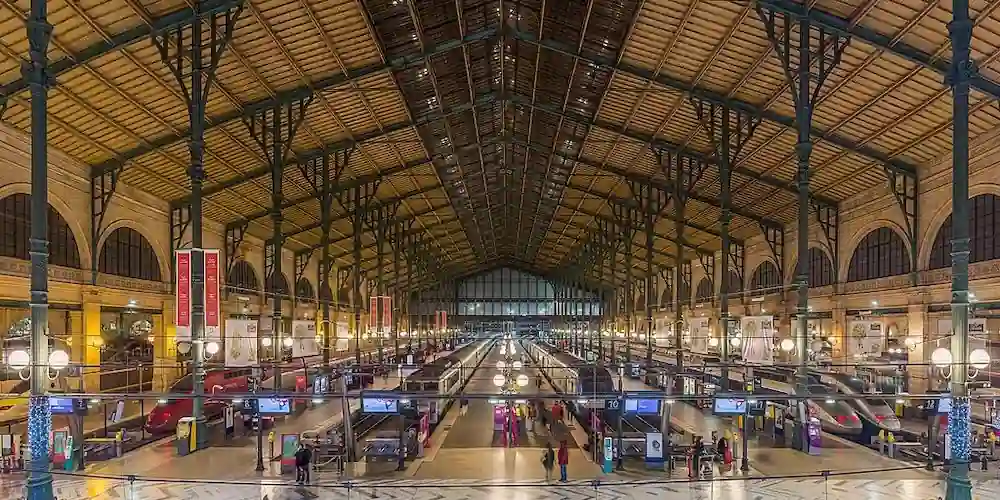 Gare du Nord main hall, photo Wikimedia by Diliff
Gare du Nord is the busiest train station in Paris and the main arrival point for Eurostar services from London, along with high-speed trains from northern France, Belgium, and the Netherlands. It sits in the 10th Arrondissement, with direct metro and RER connections across the city.
Most visitors use Gare du Nord as a transit point rather than a base, but it offers fast access to central areas including the Marais, Saint-Germain, and the Left Bank. Taxis and private transfers are readily available outside the station, making it one of the easiest arrival points for reaching your hotel.
Gare de l'Est
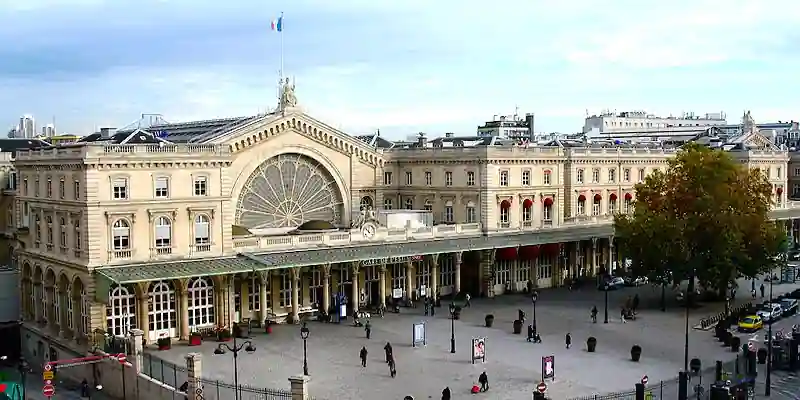 Gare de l'Est, photo Wikimedia by Gilbert Bochenek
Gare de l’Est serves trains to eastern France, including Reims, Metz, and Strasbourg, along with international routes toward Germany and beyond. It sits in the 10th Arrondissement, close to Gare du Nord, with direct Metro connections across Paris.
The station is best known to visitors as the starting point for trips to the Champagne Region. Reims, with its cathedral and historic houses, is within easy reach, making it a straightforward day trip from Paris.
Gare de Lyon
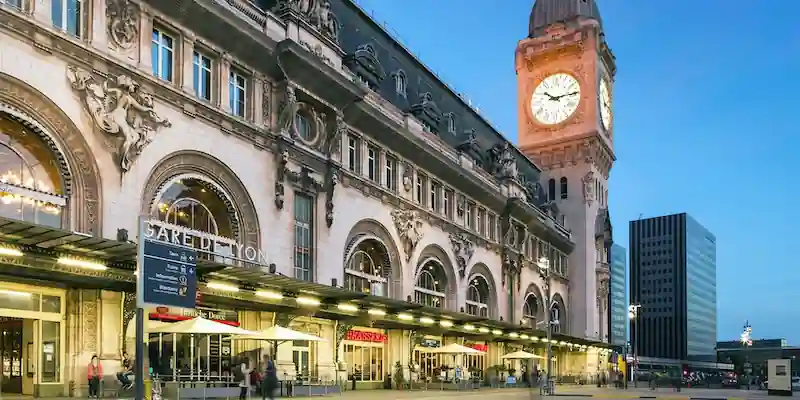 Gare de Lyon and its clock tower
Gare de Lyon serves trains to southern and southeastern France, including Lyon, Provence, and the French Riviera. It sits in the 12th Arrondissement on the Right Bank, with direct Metro and RER connections across the city.
The station is well organized and easier to navigate than Gare du Nord, with straightforward access to central neighborhoods and the Left Bank. Some visitors choose to stay nearby for early departures, but most use it as a convenient connection point into Paris.
Gare d'Austerlitz

Gare d’Austerlitz serves trains to central and southwestern France, including Orléans, Limoges, and Toulouse. It sits on the Left Bank in the 13th Arrondissement, along the Seine, with metro and RER connections into central Paris.
The station sits along the Seine on the Left Bank, with straightforward connections into central Paris. It serves a quieter part of the network, used for longer routes across central and southwestern France, and works best as a practical departure point rather than a base.

Best Things To Do In Paris
Climb the Eiffel Tower, cruise the Seine, walk Montmartre, and spend an afternoon at the Louvre. Fill your Paris days with the sights and experiences worth coming for.
Gare Montparnasse
 The exterior of Gare Montparnasse Paris after its renovation, photo by AREP
Gare Montparnasse serves trains to western France, including the Loire Valley, Bordeaux, and Brittany. It sits on the Left Bank in the 14th Arrondissement, set back from the main visitor areas but well connected by metro.
The station is modern and clearly laid out, with clear departures and direct routes to some of the most popular regions beyond Paris. For most visitors, it is a straightforward departure point rather than a place to stay.
Gare Saint-Lazare
 Gare Saint-Lazare, by Claude Monet
Gare Saint-Lazare serves trains to Normandy and the northwest of France, including Rouen, Deauville, and Le Havre. It sits in the 8th Arrondissement, within easy reach of the Opéra area and the central Right Bank. The station is also known from Claude Monet’s series of paintings, which captured its platforms and glass roof in the 1870s.
The station is integrated into a busy commercial district, with straightforward Metro connections across Paris. Most visitors use it for day trips, particularly to Giverny and the Normandy coast, rather than as a place to stay.
Le Train Bleu at Gare de Lyon
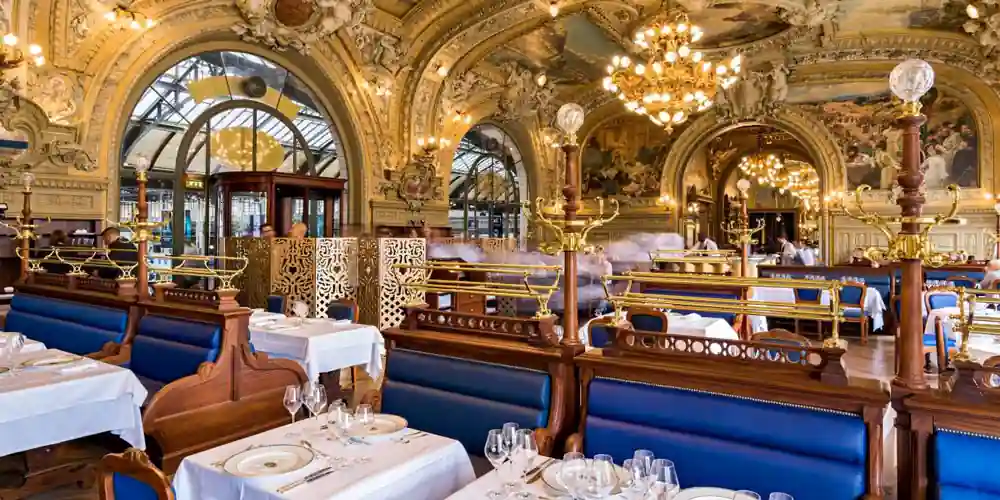 Sumptuous detailing at Le Train Bleu, photo Le Train Bleu
Paris Train Stations at a Glance
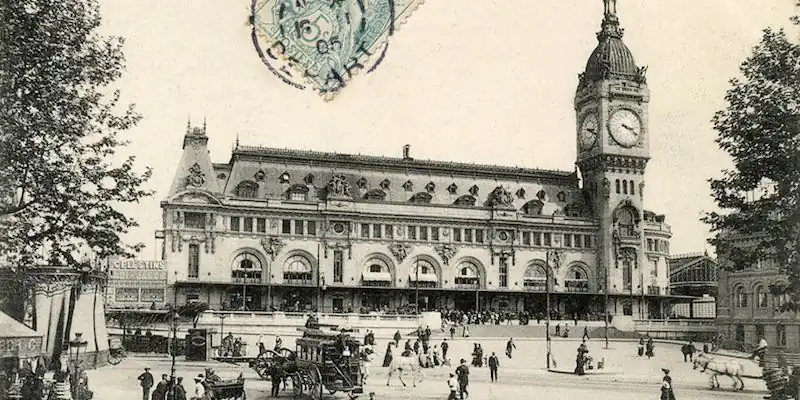 Gare de Lyon, newly opened in 1900
Paris has six main train stations, each serving a different part of France and Europe. Gare du Nord handles Eurostar and northern routes, Gare de Lyon connects to the south, Saint-Lazare to Normandy, Montparnasse to the west, and Gare de l’Est to the east. Gare d’Austerlitz serves central and southwestern France.
Knowing which station you need makes moving around Paris much simpler, whether you’re arriving, departing, or planning ahead.
FAQs – Paris Train Stations

HOW MANY MAIN TRAIN STATIONS ARE THERE IN PARIS, AND WHAT DO THEY SERVE?
Paris has six main long-distance stations: Gare du Nord, Gare de l'Est, Gare de Lyon, Gare Montparnasse, Gare d'Austerlitz, and Gare Saint-Lazare. Each serves different regions of France and Europe, so knowing which station your train uses helps you plan routes, connections, and nearby hotels.
WHICH PARIS TRAIN STATION DO I USE FOR EUROSTAR AND INTERNATIONAL TRAINS?
Eurostar trains to and from London, Brussels, and Amsterdam depart from Gare du Nord. Other international routes use different stations: Gare de l'Est for parts of Germany and eastern France, Gare de Lyon for Switzerland and Italy, and other gares for additional regional and night-train services.
HOW DO I GET FROM CENTRAL PARIS OR THE AIRPORTS TO THE TRAIN STATIONS?
All major Paris train stations connect to the Metro and many connect to RER lines as well. Gare du Nord and Gare de Lyon offer easy links from Charles de Gaulle and Orly via RER or dedicated airport buses. Taxis and pre-booked car services are the simplest options if you have lots of luggage or are traveling with a family.
HOW EARLY SHOULD I ARRIVE AT A PARIS TRAIN STATION BEFORE DEPARTURE?
For domestic TGV and intercity trains, arriving 20–30 minutes before departure is usually sufficient. For Eurostar and some international trains with check-in and security, plan to arrive 45–60 minutes early. Allow extra time if you need to collect tickets, navigate a large station, or travel at peak hours.

Where To Stay In Paris
Choose between the cafés of Saint-Germain, the streets of the Marais, and the village atmosphere of Montmartre. Find highly-rated hotels in neighborhoods across Paris.