

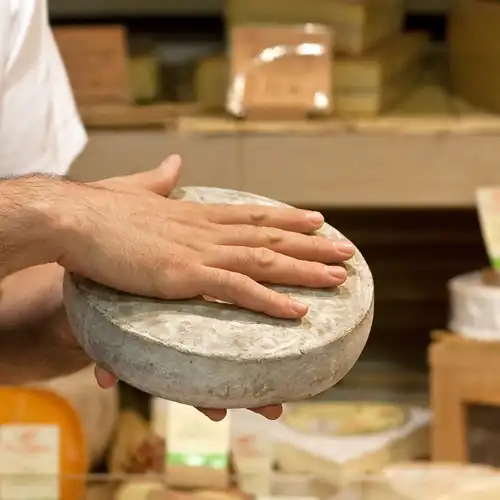


Saint-Germain-des-Prés Paris: What To See, Eat & Where To Stay
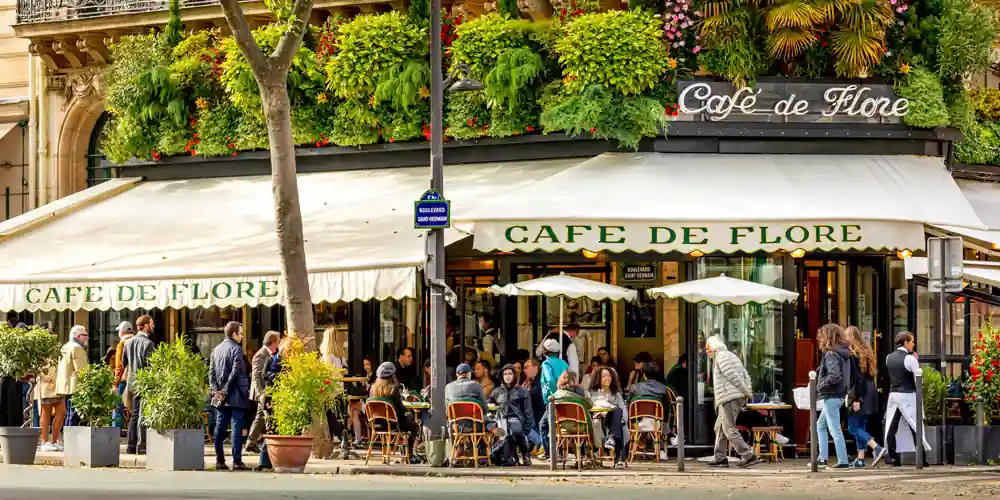 Cafe de Flor on Boulevard Saint-Germain
Saint-Germain-des-Prés sits on the Left Bank between the Seine and the Luxembourg Gardens, with a layout that makes it easy to cover on foot. Boulevard Saint-Germain and Rue Bonaparte form the backbone of the neighborhood, lined with cafés, food shops, galleries, and a steady mix of visitors and Parisians moving between them.
This is not a district built around major sights. It's a place to spend time between destinations — walking a few blocks, stopping for a drink or a meal, then continuing on. Its position next to the Latin Quarter and across the river from the Louvre makes it one of the most useful areas to include in a day's route through central Paris.
Why Visit Saint-Germain-des-Prés
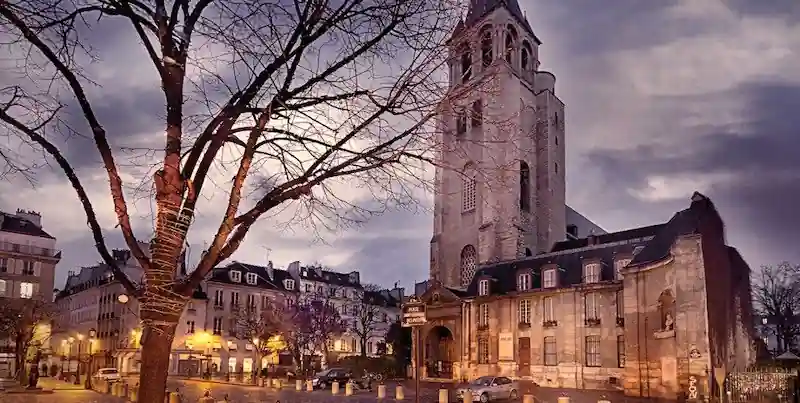 Eglise Saint-Germain-des-Prés at night
Saint-Germain concentrates a lot into a small, walkable area. Within a few blocks you have landmark cafes, specialty food shops, two major churches, and one of the largest parks in central Paris. Distances are short, and the layout is easy to follow once you arrive. You spend less time time on your mapping app and more time wandering and exploring. Most visits come down to a few streets, with everything set close together and easy to cover without planning a route
Its location places it solidly in central Paris. The Seine runs along its edge, and the surrounding Left Bank neighborhoods frame it on all sides. You don't set aside special time for Saint-Germain — it's naturally where you stop for a meal, shopping, or a break between other parts of the day.
What To See In Saint-Germain
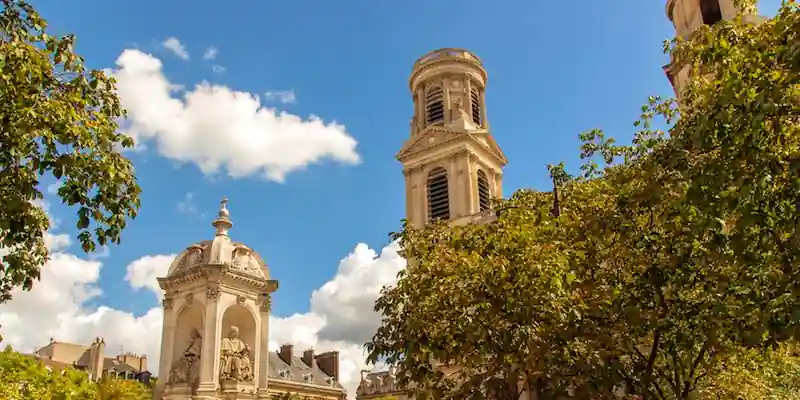 The towers and fountain of Saint-Sulpice – Mark Craft
At the western end, Église Saint-Germain-des-Prés marks the historic center, with origins going back to the sixth century. A few blocks away, Église Saint-Sulpice opens onto one of the largest squares on the Left Bank. Between them, the surrounding streets hold galleries, bookshops, and smaller details, including an unexpected statue of Ukrainian poet Taras Shevchenko near Rue des Saints-Pères.
Jardin du Luxembourg forms the southern edge, with formal paths, fountains, and the Luxembourg Palace set behind its gates. To the east, the Odéon Théâtre de l'Europe marks the boundary with the Latin Quarter. The main sights sit close together, so you can cover them without planning a route.
Église Saint-Germain-des-Prés
This church marks the historic center of Saint-Germain and gives the neighborhood its name. Its origins go back to the sixth century, making it one of the oldest religious sites in Paris. The present structure reflects later reconstruction, but it still stands as a clear reference point along Boulevard Saint-Germain.
Inside, the scale is smaller than many Paris churches, which makes a visit straightforward. Painted columns and restored decoration set it apart from the larger, more formal interiors elsewhere in the city.
Église Saint-Sulpice
Saint-Sulpice sits a few blocks away on a large open square, with a façade defined by its mismatched twin towers. It is one of the largest churches in Paris and an easy landmark within the neighborhood.
The interior is expansive, with side chapels and notable features including the gnomon used for astronomical observation. The scale and setting and especially the fountain make it one of the key stops in the area.
Jardin du Luxembourg
The Luxembourg Gardens form a broad green space at the edge of Saint-Germain, centered on the Luxembourg Palace, the home of the French senate. Formal paths, rows of trees, and fountains give the garden a structured layout that contrasts with the surrounding streets.
It is used throughout the day for walking, sitting, and short breaks. Spend time here or cross it on the way to other parts of the Left Bank, such as the Latin Quarter and the Pantheon.
Odéon Théâtre
The Odéon Théâtre de l'Europe stands on Place de l'Odéon, with a neoclassical façade that makes it one of the more recognizable buildings in this part of the Left Bank. The square itself is a natural gathering point, with steady foot traffic and cafes around its edges.
Most visitors don't go inside, but the theatre remains an active venue with a regular program of performances. Even from the outside, it holds its place as a prominent landmark in Saint-Germain.
A Small Detail: The Statue of Taras Shevchenko
Along Boulevard Saint-Germain, at Rue des Saints-Pères, a statue of Ukrainian poet Taras Shevchenko stands in a small park named after him. It's not a destination, but it adds a note of detail within the neighborhood.
Small monuments like this appear throughout the area. They sit alongside the main landmarks and are easy to miss.
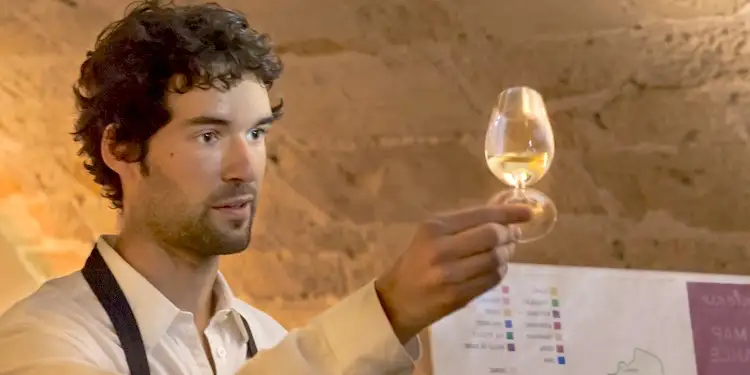
Top-Rated Food & Wine Experiences In Paris
Taste your way through Paris markets, fromageries, chocolatiers, patisseries, and boulangeries, sampling cheese, pastries, chocolate, and French wine.
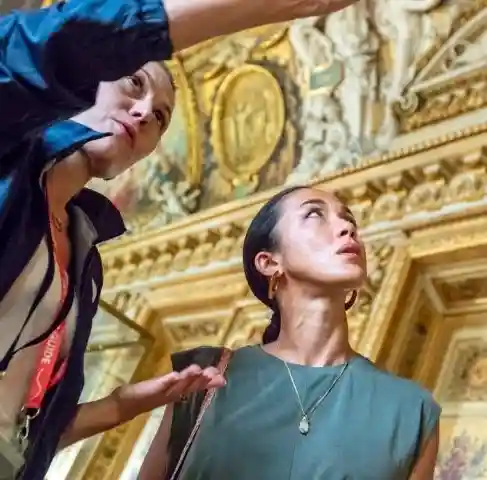
Explore Saint-Germain With A Guide
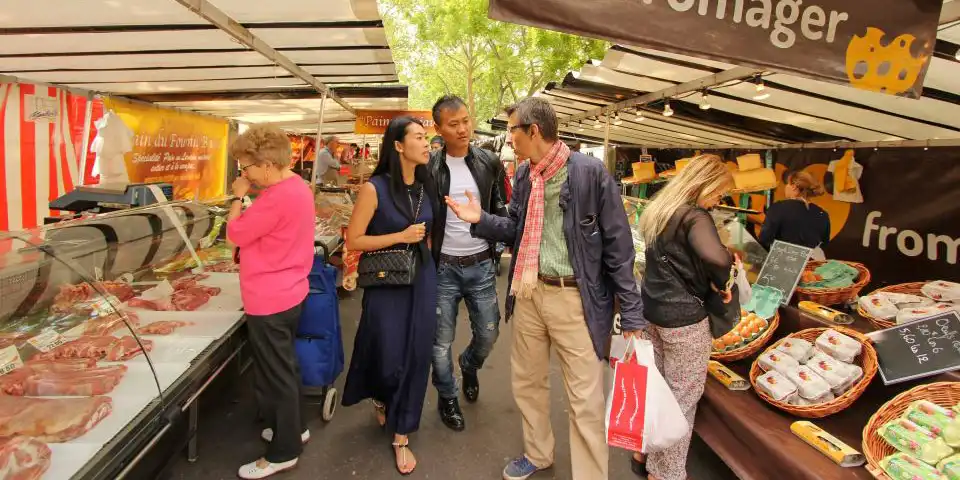 Market visits and tastings in Saint-Germain
Saint-Germain is easy to cover on your own, but guided visits narrow the focus. Most tours stay within a compact area and follow a clear theme — food, shops, or history — rather than trying to cover everything at once.
Instead of guessing where to go, you follow a set route with planned stops along the way. What stays with you is Saint-Germain — the cafes, the streets, and small moments that define this part of Paris.
Saint-Germain Food Tour
Food tours in Saint-Germain focus on a select group of well-known shops — bakeries, fromageries, and specialty food stores—set within a few streets. Tastings range from breads and cheeses to regional products, with each place known for a specific specialty.
You leave with a clear sense of what appears on a Paris table day to day, drawn from places that have long served the neighborhood.
See Tour Details & Availability →
Chocolate & Patisserie Walk
This tour concentrates on the neighborhood's chocolate makers and patisseries, with visits that highlight different approaches to craft and presentation. Each shop shows off its own style, from traditional recipes to more contemporary work.
Each tasting adds to a clearer understanding of how these specialties are made and enjoyed in Paris.
See Tour Details & Availability →
Latin Quarter & Saint-Germain Walking Tour
This guided walk links Saint-Germain with the neighboring Latin Quarter, following a route that brings together churches, older streets, and a selection of well-known landmarks. It sets out the main points clearly, without trying to cover too much.
By the end, the entire area is easier to read — its streets, its landmarks, and how it fits into central Paris.
See Tour Details & Availability →
Cooking Class & Market Visit
The cooking classes here begins with a visit to a local market, followed by a hands-on session in a nearby kitchen. Ingredients are selected on the spot, then used to prepare a full meal.
The session ends at the table, with a meal that reflects the choices made at the market and the methods used in the kitchen.
See Tour Details & Availability →
Food & Cafés In Saint-Germain
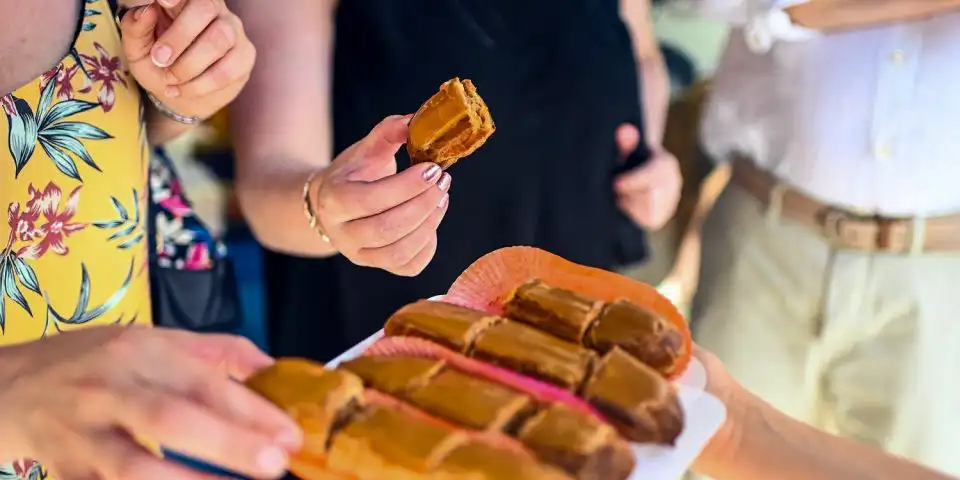 Pastry tastings on a Saint-Germain food tour
Saint-Germain brings together some of Paris's best-known cafés, long-established brasseries, and specialist food shops within a compact area. The mix ranges from historic dining rooms to shops that focus on a single specialty—cheese, chocolate, or patisserie.
You also have La Grande Épicerie de Paris nearby, with counters for cheese, charcuterie, and prepared foods alongside shelves of French and international products.
Café de Flore
Café de Flore is one of the best-known addresses in Saint-Germain, long associated with writers, artists, and the intellectual life of the Left Bank. The terrace and interior seating remain in constant use, with a steady flow of visitors throughout the day.
You come here for the setting as much as the menu. Coffee, drinks, and simple dishes are served at a pace that encourages you to stay at the table and take in the street.
Les Deux Magots
Next door, Les Deux Magots carries a similar history, with its own list of literary and artistic regulars. The space is larger, with seating both inside and along the boulevard, and a slightly more formal feel.
The menu is broader than at Flore, with full meals served throughout the day. It's often chosen for lunch or dinner, when the dining room and terrace fill with a mix of visitors and regulars.
Brasserie Lipp
Across Boulevard Saint-Germain, Brasserie Lipp offers a more traditional dining room, with a long history tied to classic French and Alsatian cooking. The space is compact and busy, with staff who keep the pace steady.
It's a place for a proper meal rather than a short stop, with a menu built around established dishes and consistent preparation.
La Grande Épicerie de Paris
La Grande Épicerie brings together a wide range of French and international products in a single, well-organized space. Counters focus on specific categories—cheese, charcuterie, prepared foods—along with shelves of packaged goods.
It functions as both a place to shop and an interesting stop during the day. You can pick up items to take away or pause at one of the counters to eat something simple.
Debauve & Gallais
Debauve & Gallais may be the oldest chocolate makers in Paris, with roots going back to the eighteenth century. The shop is small, with a restrained presentation that sets it apart from modern brands.
The focus remains on traditional recipes and long-established preparations, offering a quieter contrast to the more prominent names nearby.
A Chocolate & Patisserie Walk In Saint-Germain
Taste your way through historic Saint-Germain with a food guide, stopping at chocolatiers and patisseries for fine chocolates, macarons, and buttery pastries.
Where To Stay In Saint-Germain
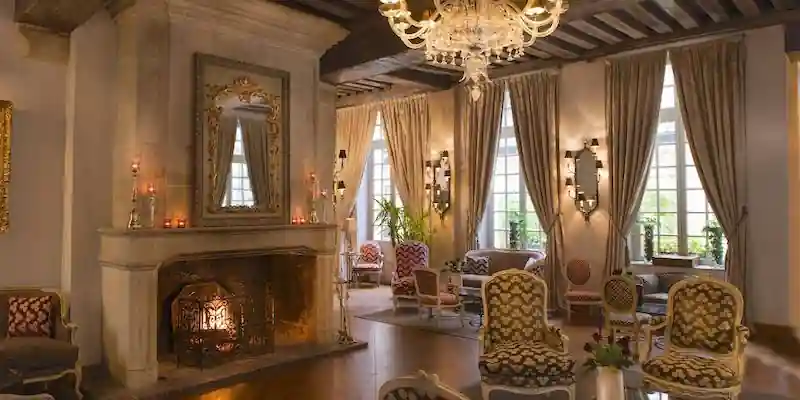 Hôtel d'Aubusson lobby with fireplace
Saint-Germain is one of the most convenient areas to stay on the Left Bank. Hotels sit within walking distance of the Seine, major sights, and several Metro lines, while the neighborhood itself stays active throughout the day with cafes, shops, and restaurants close by.
The selection here tends toward smaller, established hotels rather than large modern properties. Rooms are compact, but locations are strong, and many addresses sit on quieter streets just off the main boulevards.
Hôtel d'Aubusson
Hôtel d'Aubusson stands out for its setting in a seventeenth-century townhouse, with exposed beams, stone walls, and a central courtyard that sets it apart from standard hotel interiors. The location, just off Rue Dauphine, places you within a few minutes of the Seine and the main streets of Saint-Germain.
Rooms vary in size but maintain a consistent style, and the hotel includes a bar with live jazz in the evenings. It's one of the more distinctive stays in the area, combining location with a strong sense of place.
Hôtel Baume
Hôtel Baume sits near the Odéon, with a design that draws on 1930s cinema and Art Deco details. The rooms are compact but carefully arranged, with a consistent style across categories.
Its position places you within easy reach of both Saint-Germain and the Luxembourg Gardens. It suits visitors who want a smaller hotel with a clear design identity in a central location.
Le Relais Saint-Germain
Le Relais Saint-Germain offers a more informal stay, with a small number of rooms above a well-known restaurant. The setting is simple, with an emphasis on location rather than amenities.
Rooms are comfortable and straightforward, and the address places you close to the main streets of the neighborhood. It's a practical choice for visitors who plan to spend most of their time out rather than in the hotel.
Hotel Bel Ami
Hotel Bel Ami provides a more contemporary option, with larger common spaces and a quieter interior atmosphere compared to smaller boutique hotels nearby. The design is modern, with neutral tones and clean lines.
The location, just off Boulevard Saint-Germain, places you close to shops and restaurants while keeping a slight distance from the busiest streets. It's a good fit if you prefer a more modern hotel in this part of Paris.
See More Hotel Options In Saint-Germain →
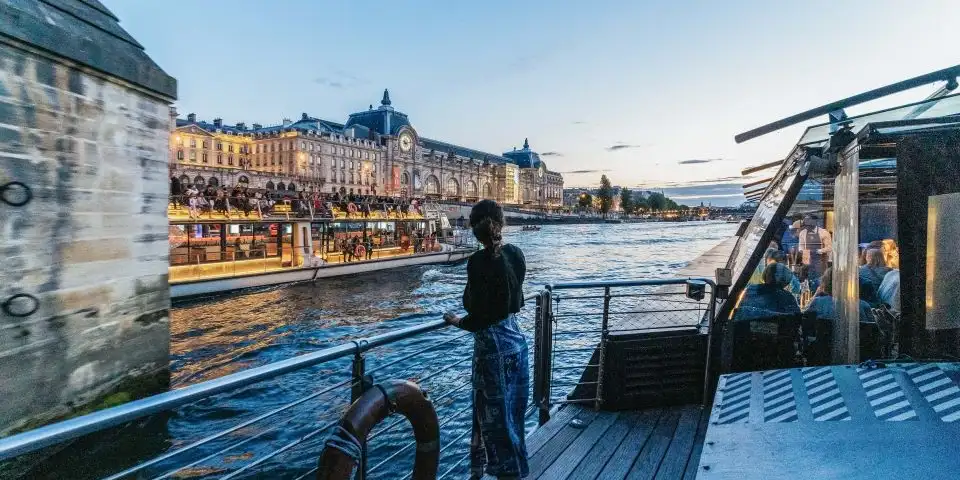
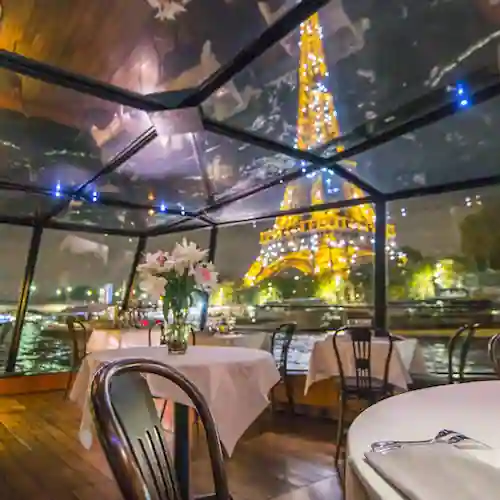
A Classic Seine Dinner Cruise
Dine on the Seine as Paris lights up around you, with French cuisine served aboard a glass-walled boat cruising past the Eiffel Tower, Notre-Dame, and Louvre.
Museums In Saint-Germain
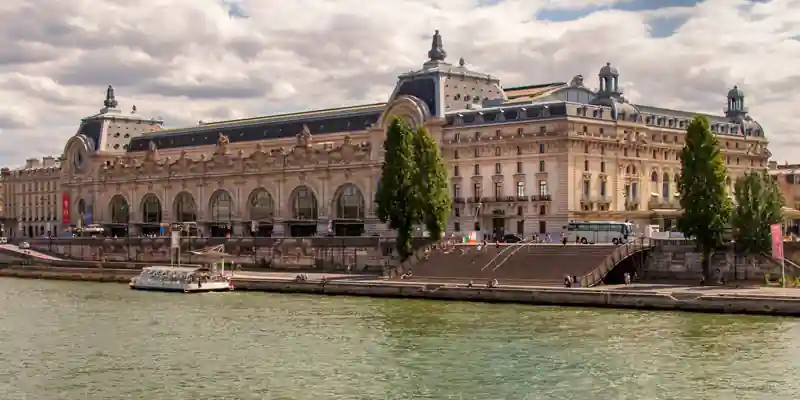 Musée d'Orsay on the Left Bank – Mark Craft
Saint-Germain includes a small but varied group of museums, from artist's houses to major public collections. Some are quick visits that fit into a walk through the neighborhood; others can take the better part of an afternoon.
The mix is part of the appeal. You have Delacroix in a quiet corner near Place de Furstenberg, the Musée du Luxembourg beside the gardens, and the Musée d'Orsay facing the Seine. Together they add another layer to Saint-Germain beyond cafes, shops, and churches.
Musée Delacroix
On Place de Furstenberg, a few steps from Boulevard Saint-Germain, the Delacroix Museum occupies the former apartment and studio of Eugène Delacroix. The setting is modest, which suits the scale of the museum and sets it apart from the larger institutions elsewhere in Paris.
You come here for the rooms as much as the collection. Paintings, sketches, and personal objects bring you close to the artist's working life, while the small garden is one of the quieter corners in Saint-Germain.
Musée du Luxembourg
Beside the Luxembourg Gardens, the Musée du Luxembourg is one of the oldest museums in Paris and now focuses on temporary exhibitions. Its size makes it manageable, especially if you want to see a strong show without committing half a day.
The setting also helps. A museum visit here fits naturally with time in the gardens or a walk back through Saint-Germain — one of the easier cultural stops to add to the day.
Musée d'Orsay
Musée d'Orsay occupies a former railway station on the Seine, with a collection focused on nineteenth-century art, including Impressionist and Post-Impressionist painting. Works by Monet, Manet, Degas, Renoir, and Van Gogh form the core of the museum.
The building itself stands out, with large open galleries and a central hall that sets the scale. It's one of the major museums in Paris and requires more time than the smaller museums in Saint-Germain.
Musée Zadkine
A little farther from the center of Saint-Germain, the Zadkine Museum rewards the short detour. Set in the former home and studio of sculptor Ossip Zadkine, it combines interior galleries with a garden where sculpture is part of the setting.
The museum is small enough to visit without planning around it. Its scale, quiet location, and focus on one artist give it a different mood from the larger museums of Paris.
Getting Around & Practical Details
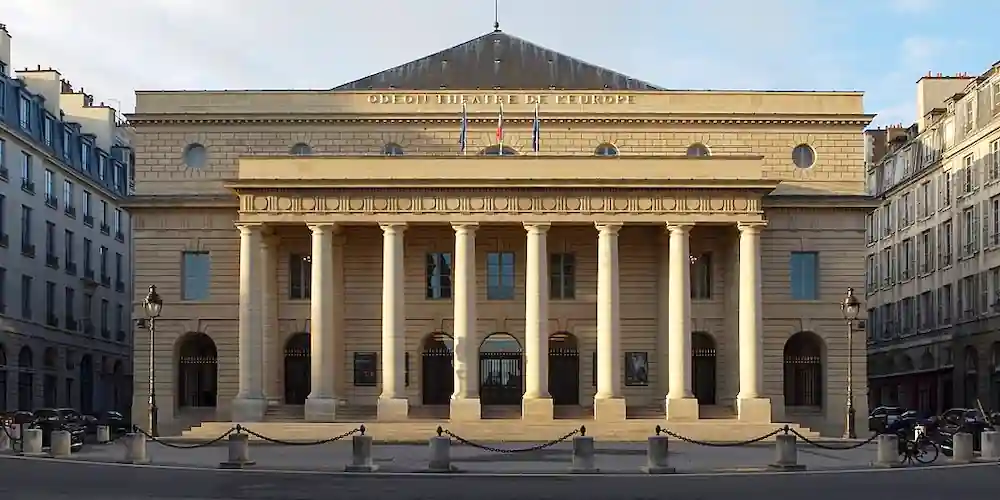 Odeon Theatre – Thierry Depagne
Saint-Germain is easy to cover on foot. Distances are short, and the main streets, churches, and cafés are close together. The Seine forms the northern edge, with several bridges linking to the Right Bank.
Metro Line 4 runs through the neighborhood, with stops at Saint-Germain-des-Prés and Odéon. Other Metro lines connect quickly to the rest of the Left Bank and central Paris. Buses also run along Boulevard Saint-Germain, adding another option when you're heading farther across the city.
Continue Planning Your Paris Visit
Where To Stay In Paris →
Paris Neighborhoods →
How Many Days In Paris →
Paris For First-Time Visitors →
City of Paris: Events & News →
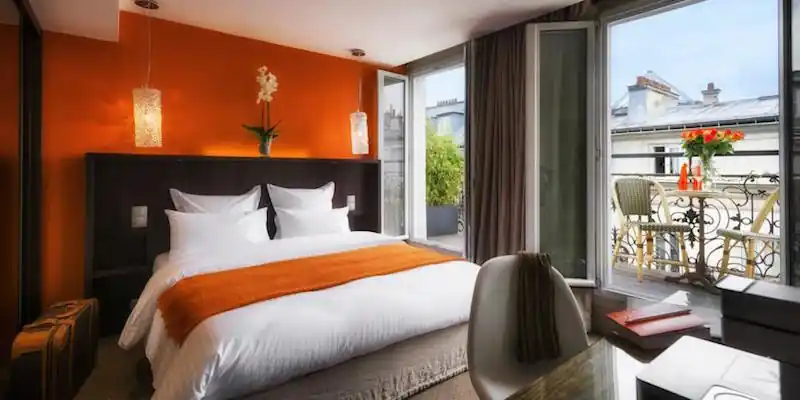
Find Your Paris Hotel: Choosing The Right Area
Wake up near the cafés of Saint-Germain, the streets of the Marais, or the village lanes of Montmartre. Find a Paris hotel in the neighborhood you want to call home.
Discover What's On When You're HereOctober 2026 Things to DoNovember 2026 Things to DoDecember 2026 Things to DoChristmas in ParisNew Year's Eve in ParisMonth-by-Month Calendar |