


All Michelin Star Restaurants In Paris: The Complete Guide
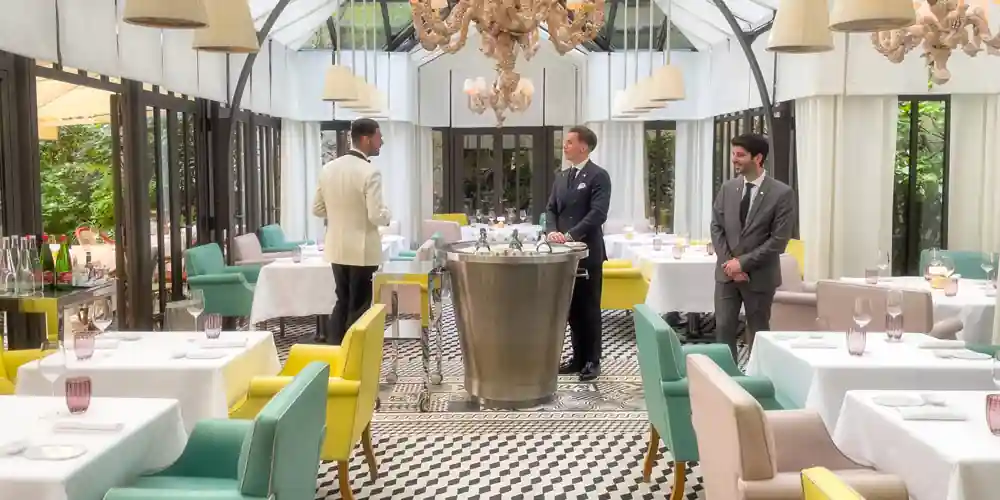 Il Carpaccio dining room, Paris
Michelin star restaurants in Paris sit at the top of the city's dining landscape, but they don't all feel the same once you're at the table. Some are formal, extended meals built around technique and service; others are quieter rooms where the focus stays firmly on the cooking. The stars signal consistency and precision, not a single style.
Paris has dozens of Michelin-starred restaurants, and they are spread across the city rather than clustered in one area. This guide brings them together in one place, so you can see the range — from the most formal dining rooms to smaller, less rigid settings — and decide which ones are worth booking ahead.
Jump to These Sections
How Michelin Dining Works In Paris
Michelin stars are awarded to restaurants, not chefs, and they reflect the consistency and precision of the cooking rather than the setting alone. In Paris, that means a wide range of rooms — from formal dining rooms with full service to smaller, more restrained spaces where the attention stays on the plate. The number of stars signals the level, but not the style.
What changes as you move from one to three stars is the scale of the meal. At the top level, meals stretch over several hours with multiple courses and close attention from the staff. One-star restaurants are often more compact, with shorter menus and a slightly easier pace. In every case, reservations are expected, and the most sought-after tables fill early.
Three-Star Restaurants: The Full Evening
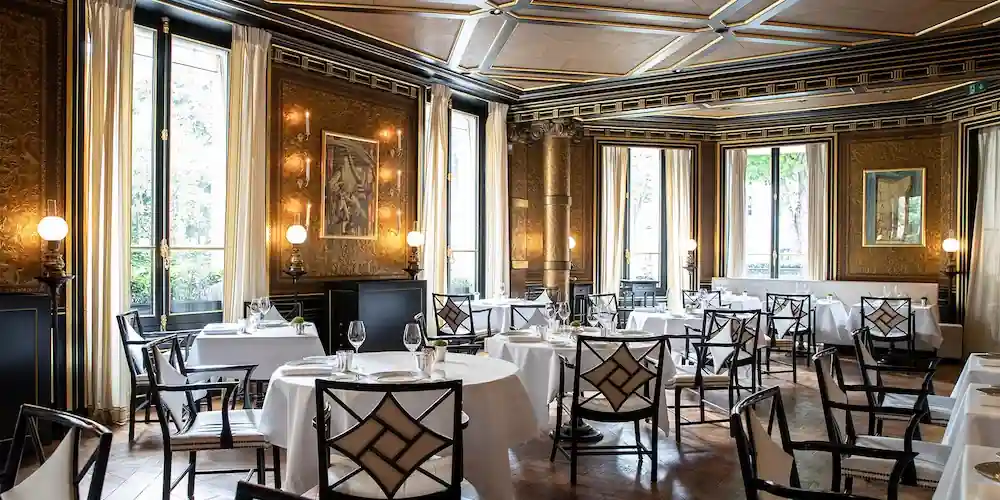 Le Gabriel dining room, La Réserve Paris
Three-star restaurants set the top level of dining in Paris, as defined by the Michelin Guide, with formal rooms, detailed service, and menus built as a sequence of courses. These are the dining rooms found in palace hotels and established addresses, where the setting carries as much weight as the cooking.
Expect richly decorated spaces, multiple courses, and dishes that build in complexity as the meal goes on. It's the most structured form of dining in the city, with an emphasis on presentation, technique, and tradition.
Pierre Gagnaire (8th Arrondissement)
Near the Champs-Élysées, on Rue Balzac, Pierre Gagnaire presents a more complex style of three-star cooking, with multiple elements on each plate and combinations that change throughout the menu. The dining room is formal but relatively restrained.
Courses often arrive with several smaller plates alongside the main dish, each offering a variation on the same ingredients. The combinations shift throughout the meal, with contrasts in texture and flavor presented together.
Le Pré Catelan (16th Arrondissement)
In the Bois de Boulogne on the edge of the city, Le Pré Catelan sits in a pavilion surrounded by greenery, with large windows and a brighter, more open dining room than most three-star restaurants in Paris.
Being outside the center changes the tone of the meal. It feels less tied to the rhythm of the city, with a setting that is quieter and more removed, and a menu that leans toward contemporary presentation with clear seasonal ingredients.
Épicure (8th Arrondissement)
In the Le Bristol hotel near the Élysée Palace, Épicure is a three-star restaurant with a large, bright dining room that looks onto a garden courtyard. The cooking follows a classic French approach, with recognizable dishes built from seasonal ingredients and a steady, structured menu.
The setting is formal but not rigid, and the meal moves at a measured pace without feeling drawn out. Reservations are required, but the room feels more open and less ceremonial than some of the city's grandest dining rooms.
Plénitude (1st Arrondissement)
At the Cheval Blanc hotel on the Seine near the Louvre, Plénitude is a three-star restaurant with a small dining room and a formal, controlled service style. The cooking is built around sauces, with each course structured to highlight how they are prepared and used.
Dishes arrive in a fixed sequence, often with several elements presented together on the plate. Much of the interest comes from how those elements interact, with combinations that are meant to be tasted as a whole rather than one component at a time.
Arpège (7th Arrondissement)
On the Left Bank near Les Invalides, Arpège is a three-star restaurant focused on vegetables, with menus that change regularly based on what is available. The dining room is simple and relatively small, and the cooking avoids the heavier style found in many traditional French kitchens.
Meals follow a set progression but feel less formal than in the larger hotel dining rooms. Reservations are still essential, but the tone is quieter, with more emphasis on the ingredients than on ceremony.
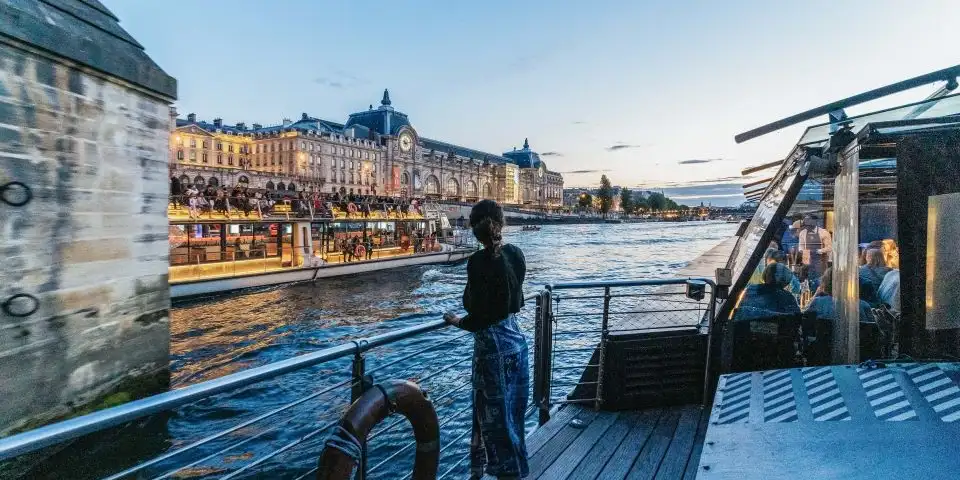
A Classic Seine Dinner Cruise
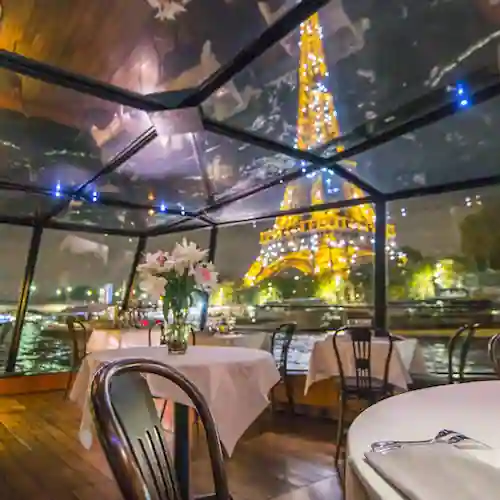
Dine on the Seine as Paris lights up around you, with French cuisine served aboard a glass-walled boat cruising past the Eiffel Tower, Notre-Dame, and Louvre.
Le Cinq (8th Arrondissement)
Inside the Four Seasons George V off the Champs-Élysées, Le Cinq is one of the most formal three-star dining rooms in Paris, with a richly decorated space and a traditional service style. The menu is detailed and structured, with multiple courses presented in a set progression.
Meals here are long and carefully paced, with close attention from the staff throughout. This is a restaurant to book well in advance and plan as a full evening, rather than something to fit around other plans.
Alléno Paris au Pavillon Ledoyen (8th Arrondissement)
In the Pavillon Ledoyen off the Champs-Élysées gardens, Alléno Paris is a three-star restaurant set in a historic building with a formal dining room and precise service. The cooking centers on sauces and reductions, with a modern approach to classic French techniques.
The cooking emphasizes concentrated flavors, with dishes built through reductions and layered preparation. Plates tend to be structured and deliberate, with a clear focus on depth rather than simplicity.
Le Gabriel – La Réserve Paris (8th Arrondissement)
In the La Réserve hotel near the Champs-Élysées, Le Gabriel is a small dining room with a restrained interior and far fewer tables than the larger Palace hotels.
With only a few tables, service is direct and closely managed, and the room stays quiet. The cooking follows a precise French style, with clearly defined dishes and careful presentation rather than elaborate compositions.
Kei (1st Arrondissement)
Near the Palais Royal, Kei has a calm, modern dining room, with a lighter atmosphere than many three-star restaurants in Paris.
The cooking combines French technique with a more contemporary style, often expressed through clean presentation and careful balance on the plate. It feels less tied to tradition, both in the room and in the way the dishes are put together.
Other Ways To Plan An Evening In Paris
See Our Guide To The Best Evenings In Paris →
Compare Dinner Cruises On The Seine →
See Paris Food Tours →
Two-Star Restaurants: A More Flexible Choice
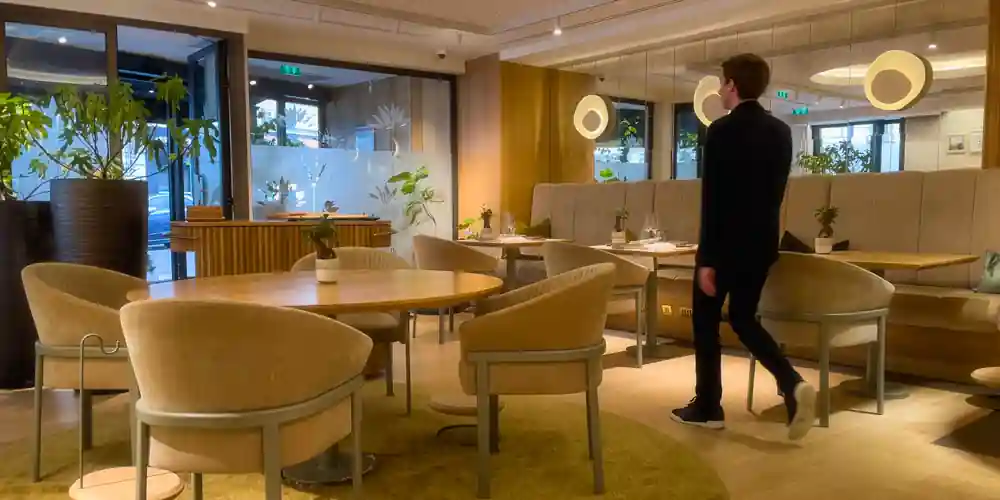 Astrance dining room, Paris
Two-star restaurants offer serious cooking without the formality of the three-star dining rooms. The rooms are often smaller, the service more straightforward, and the focus stays on what comes out of the kitchen rather than on ceremony.
You'll find a mix of styles here. Some are modern, with lighter rooms and changing menus; others are more traditional, with familiar French dishes in established settings. You'll see everything from sushi counters to classic dining rooms, all working at a consistently high level.
Le Meurice Alain Ducasse (1st Arrondissement)
In the Le Meurice hotel facing the Jardin des Tuileries, the room mirrors palace interiors with high ceilings and ornate detail. The cooking follows a refined French line, often centered on vegetables and seasonal products, with dishes that are composed carefully without excess.
Hakuba (1st Arrondissement)
At the Cheval Blanc hotel, Hakuba is a sushi counter with limited seating and a direct view of the chefs at work. The meal is served as an omakase sequence, focused on fish, rice, and timing rather than additional elements or presentation.
Sushi Yoshinaga (2nd Arrondissement)
In a small, discreet space in the 2nd arrondissement, Sushi Yoshinaga offers a quiet counter with a handful of seats. The focus is on traditional sushi preparation, with careful attention to rice and fish, and a meal that stays close to classic technique.
L'Ambroisie (4th Arrondissement)
On Place des Vosges in The Marais, L'Ambroisie keeps a formal dining room with classic décor and a long-established atmosphere. The cooking remains rooted in traditional French dishes, with rich preparations and a menu that changes little over time.
Alliance (5th Arrondissement)
Near the Sorbonne, Alliance is set in a modern dining room with a clean, understated interior. The cooking combines French technique with lighter compositions, with menus that change regularly and reflect what is available.
Guy Savoy (6th Arrondissement)
At Monnaie de Paris along the Seine, Guy Savoy is arranged across several rooms rather than one large space. The menu includes a number of signature dishes that appear consistently, alongside seasonal variations.
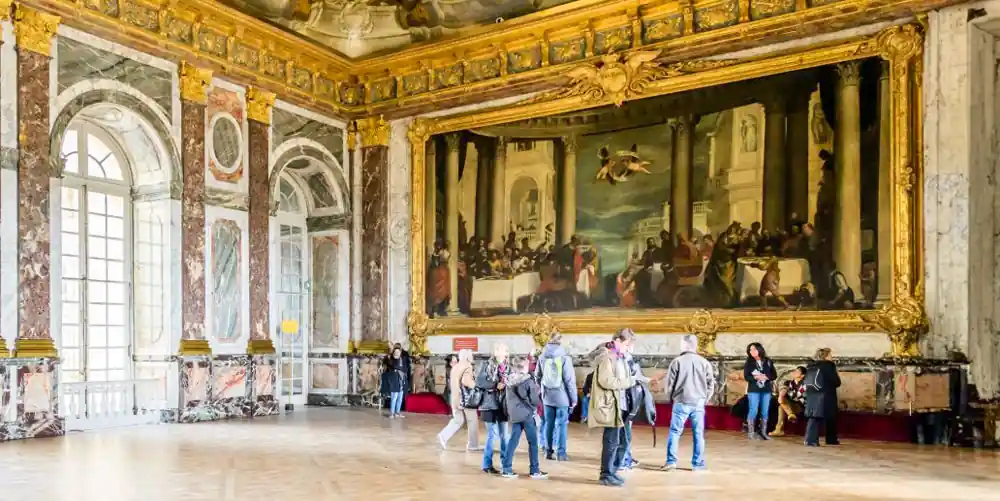
Versailles Day Trip From Paris
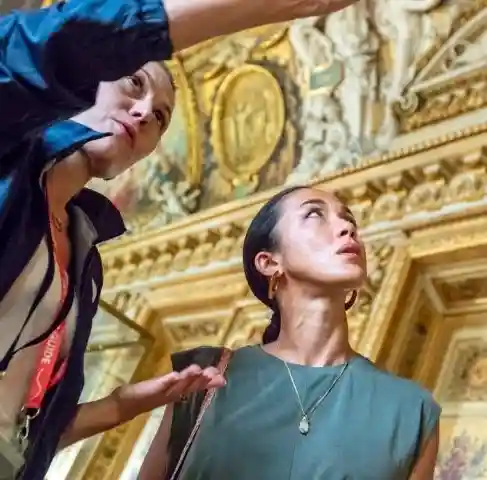
Step into Versailles with reserved access for gilded royal apartments and the Hall of Mirrors, then wander the vast gardens and Marie Antoinette's estate.
Marsan par Hélène Darroze (6th Arrondissement)
In Saint-Germain-des-Prés, Marsan has a modern dining room with a warmer, more relaxed feel than many formal restaurants. The cooking draws on regional influences, with dishes that emphasize ingredients and personal interpretation.
David Toutain (7th Arrondissement)
On the Left Bank, David Toutain is set in a contemporary space with an open view into the kitchen. The menu focuses on vegetables, grains, and seafood, often combined to highlight texture as much as flavor.
Le Jules Verne (7th Arrondissement)
On the Eiffel Tower, Le Jules Verne offers a dining room with direct views over Paris. (See the restaurant's official site).The cooking follows a modern French style, with dishes that are structured but adapted to the setting.
L'Abysse (8th Arrondissement)
In the Pavillon Ledoyen complex, L'Abysse is a sushi counter with a minimal setting and limited seating. The focus is on traditional preparation, with fish served in sequence and attention placed on balance and consistency.
Le Clarence (8th Arrondissement)
In a private mansion near the Champs-Élysées, Le Clarence is arranged across several richly decorated rooms rather than one large space, with a menu that follows a classical French line, featuring layered preparations and carefully plated dishes built on traditional techniques.
Le Grand Restaurant - Jean-François Piège (8th Arrondissement)
Also near the Champs-Élysées, Le Grand Restaurant is set in a compact dining room with a distinctive oval layout, where the menu revisits classic French dishes, reworked with modern techniques while keeping their structure recognizable.

A Champagne Day Trip From Paris
Spend a day in Champagne among vineyard villages, historic houses, and family producers. Tour the cellars, walk the vineyards, and taste champagne where it's made.
L'Orangerie (8th Arrondissement)
At the George V hotel, L’Orangerie is set in a smaller, quieter room with a lighter interior, where the cooking centers on fish and vegetables, presented in clean compositions with a focus on balance rather than richness.
La Scène (8th Arrondissement)
La Scène has a darker, more contemporary dining room, where dishes are built around a few elements, with clear flavors and direct combinations that avoid heavy sauces and keep each plate easy to follow.
Le Taillevent (8th Arrondissement)
Le Taillevent maintains a traditional dining room with a long-established identity and an extensive wine list. The cooking follows classic French lines, with an emphasis on consistency and familiar preparations.
Table - Bruno Verjus (12th Arrondissement)
Near the Marché d'Aligre, Table is arranged around a counter with seating close to the kitchen, where the menu follows what arrives each day, with dishes built from available ingredients rather than a fixed structure.
Virtus (12th Arrondissement)
Virtus is set in a modest dining room with a small number of tables, where the menu changes regularly, drawing on French technique alongside outside influences and shifting with available ingredients.
Blanc (16th Arrondissement)
In the 16th arrondissement, Blanc has a bright, modern dining room. The menu features a small number of dishes built around seasonal ingredients, presented with simple plating and clear combinations.
L'Oiseau Blanc (16th Arrondissement)
On the rooftop of the Peninsula hotel, L'Oiseau Blanc looks out over the city, with wide views across Paris. The cooking follows a contemporary French style, with dishes that reflect the setting without excess.
Maison Rostang (17th Arrondissement)
In the 17th arrondissement, Maison Rostang keeps a traditional dining room with a long-standing identity. The cooking draws on classic French dishes, with an emphasis on continuity rather than reinvention.
Plan The Rest Of Your Time In Paris
See Paris Food Tours →
Compare Dinner Cruises On The Seine →
See What To Do In Paris →
Explore The Best Day Trips From Paris →
One-Star Restaurants: The Wider Field
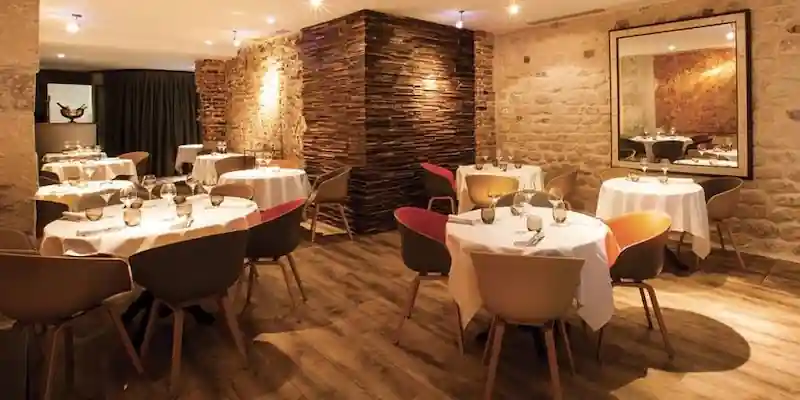 Jacques Faussat dining room, Paris
One-star restaurants make up most of the Michelins Guide and are spread across Paris in every arrondissement. This is the largest group, covering a wide range of kitchens and dining rooms, all working at a consistent level.
The list below is grouped by arrondissement so you can see what’s nearby. Use it as a reference when you’re deciding where to eat.
- Le Baudelaire
- Espadon
- Granite
- Jin
- Maison Ruggieri Palais Royal
- Nhome
- Omar Dhiab
- Pantagruel
- Le Tout-Paris
2nd Arrondissement
- Accents Table Bourse
- Fleur de Pavé
- Frenchie
- Pur' - Jean-François Rouquette
- Shabour
- Sushi B
3rd Arrondissement
- Anne
- Datil
4th Arrondissement
- Aldehyde
- Restaurant H
- Le Sergent Recruteur
5th Arrondissement
- AT
- Baieta
- Mavrommatis
- Sola
- Solstice
- Tour d'Argent
6th Arrondissement
- Armani Ristorante
- Quinsou
- Relais Louis XIII
- Yoshinori
- Ze Kitchen Galerie
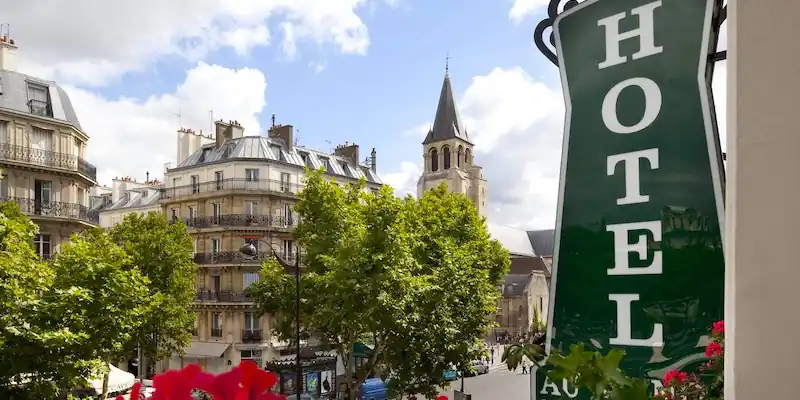
Where To Stay In Paris
Choose between the cafés of Saint-Germain, the streets of the Marais, and the village atmosphere of Montmartre. Find highly-rated hotels in neighborhoods across Paris.
7th Arrondissement
- Aida
- Auguste
- Divellec
- ES
- Gaya par Pierre Gagnaire
- HANADA
- Nakatani
- Pertinence
- Prévelle
- Tomy & Co
- Le Violon d'Ingres
8th Arrondissement
- Akrame
- Apicius
- L'Arôme
- L'Atelier de Joël Robuchon - Étoile
- 114, Faubourg
- Contraste
- Galanga
- Le George
- Héritages
- Il Carpaccio
- Imperial Treasure
- Irwin
- Jean Imbert au Plaza Athénée
- Lasserre
- Lucas Carton
- Maison Dubois
- Monsieur Dior by Yannick Alléno
- Onor
- Origines Restaurant
- Pavyllon Paris
- Trente-Trois
9th Arrondissement
- NESO
11th Arrondissement
- Amâlia
- Automne
- FIEF
- Géosmine
- Qui Plume la Lune
- Septime
- Vaisseau
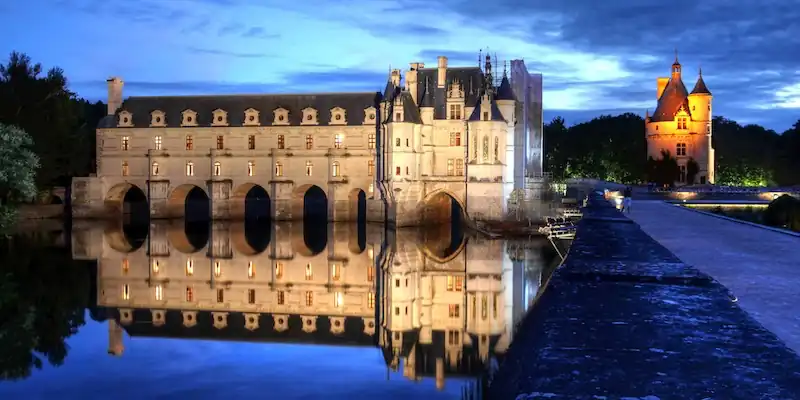
Day Trips From Paris
Just beyond Paris are royal chateaux, wine regions, medieval towns, and historic landmarks, all close enough to visit on a guided day trip from the city.
14th Arrondissement
- MoSuke
15th Arrondissement
- Chakaiseiki Akiyoshi
- Neige d'Été
- Pilgrim
16th Arrondissement
- Alan Geaam
- L'Archeste
- Astrance
- Bellefeuille - Saint James Paris
- Comice
- Don Juan II
- Geoélia
- La Grande Cascade
- Nomicos
- Ōrtensia
- Pages
- Substance
- Zostera
17th Arrondissement
- Agapé
- Anona
- Épisodes
- Le Faham
- Frédéric Simonin
- Jacques Faussat
- Mallory Gabsi
- Oxte
- La Scène Thélème
18th Arrondissement
- Sushi Shunei
Plan The Rest Of Your Time In Paris
See The Best Evenings In Paris →
See Paris Food Tours →
Compare Dinner Cruises On The Seine →
See What To Do In Paris →
A Classic Seine Dinner Cruise
Dine on the Seine as Paris lights up around you, with French cuisine served aboard a glass-walled boat cruising past the Eiffel Tower, Notre-Dame, and Louvre.