







Paris Neighborhoods: Where To Stay & How To Choose
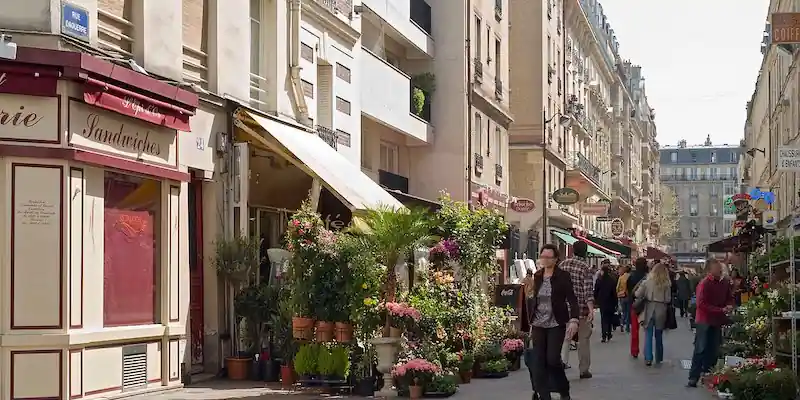 A Paris street scene – photo Myrabella (Wikimedia)
Paris is organized by arrondissement, but most visitors choose where to stay by neighborhood. These smaller areas define what is outside your hotel door—street layout, nearby cafés, how busy it feels, and how easily you reach the main sights.
This guide focuses on seven neighborhoods that are well-located, easy to navigate, and offer reliable hotel options. Each has a distinct character and practical advantages as a base. The aim is to help you compare them quickly and choose the one that fits your stay.
Where To Stay In Paris
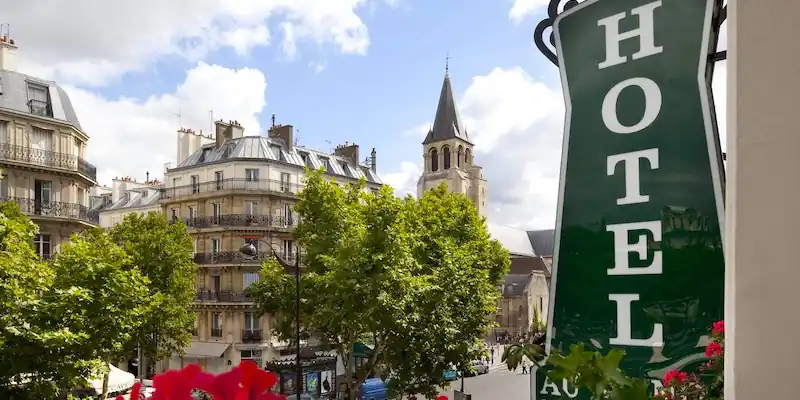
Choose between the cafés of Saint-Germain, the streets of the Marais, and the village atmosphere of Montmartre. Find highly-rated hotels in neighborhoods across Paris.
The Marais
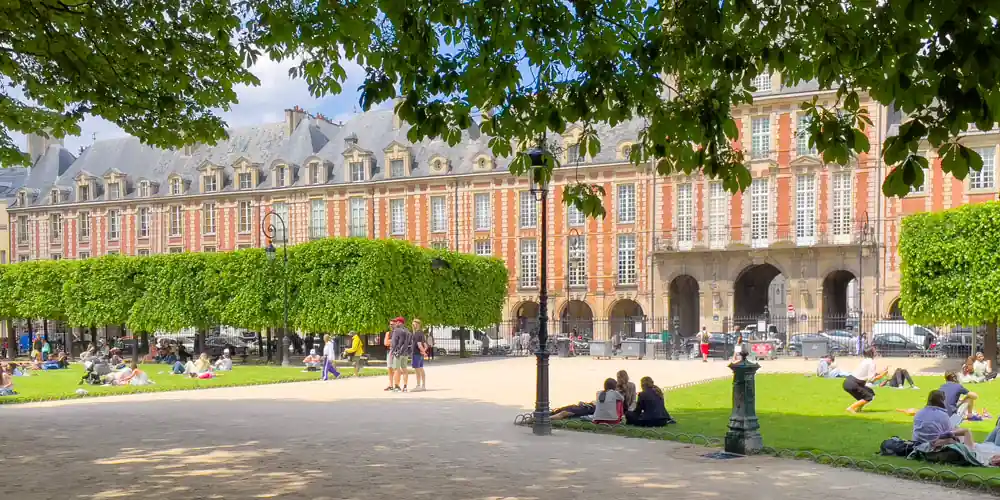 Place des Vosges in the Marais – photo Mark Craft
The Marais spans the 3rd and 4th Arrondissements, with a dense network of historic streets, small museums, and well-used squares such as Place des Vosges. Its central position puts the Seine, Notre-Dame, and several major sights within easy walking distance.
Streets stay active throughout the day and into the evening, with a wide range of cafés, shops, and restaurants. It suits visitors who want a central base with consistent activity and straightforward walking access to much of Paris.
The Latin Quarter
 Cafe street scene in the Latin Quarter
The Latin Quarter sits on the Left Bank around the Sorbonne, extending toward the Seine and Notre-Dame. Streets are compact and easy to navigate, with a mix of historic sites, bookshops, and casual places to eat. It is one of the most accessible areas for first-time visitors.
The atmosphere is informal and busy, especially during the day. Restaurants tend toward simple, affordable options rather than destination dining. It suits visitors who want a central location, straightforward layout, and good value for the area.
Saint-Germain-des-Prés
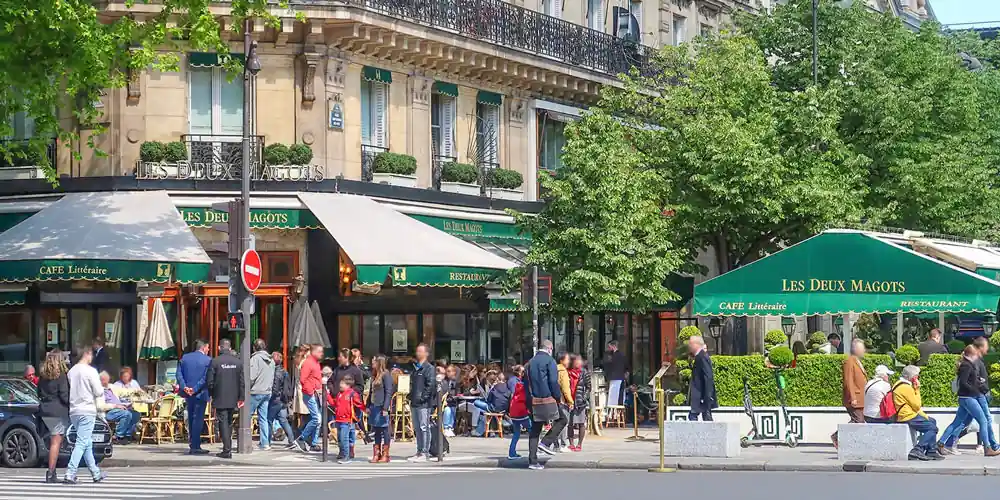 Cafe terrace at Les Deux Magots in Saint-Germain
Saint-Germain-des-Prés anchors the Left Bank with wider streets, established cafés, and a strong concentration of galleries and independent shops. It sits close to the Seine and within easy reach of the Louvre and central Paris.
The area feels composed and consistent, with fewer budget options but a higher concentration of well-regarded hotels. It suits visitors who value a polished setting, good walkability, and easy access to major sights without heavy crowds.
The Eiffel Tower Quartier
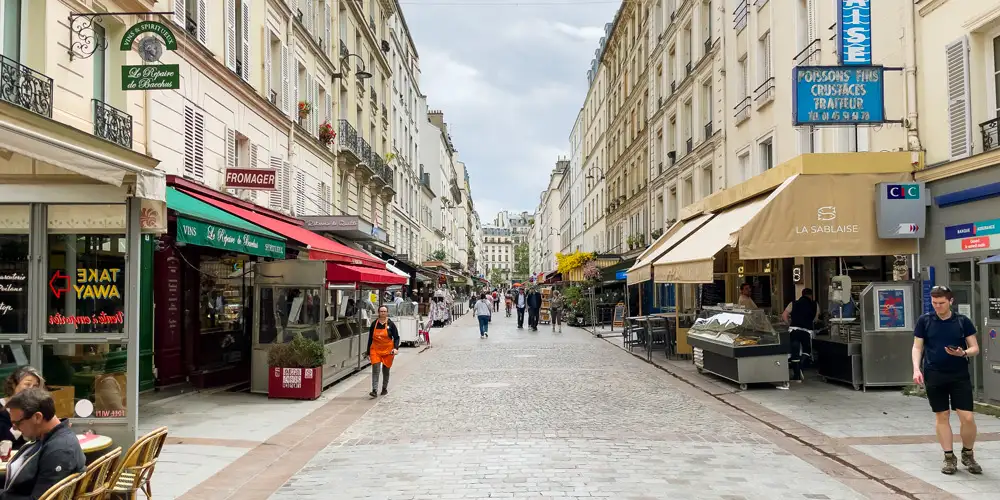 Rue Cler street scene in the 7th arrondissement – photo Mark Craft
The area, or quartier, around the Eiffel Tower, particularly in the 7th arrondissement, combines residential streets with open avenues and local market streets such as Rue Cler. It is quieter than many central districts while remaining close to key sights.
Daily life here is more measured, with bakeries, small shops, and fewer large crowds outside peak times. It suits visitors who want a calmer base near a major landmark, with reliable transport connections to the rest of the city.
The Champs-Élysées Area
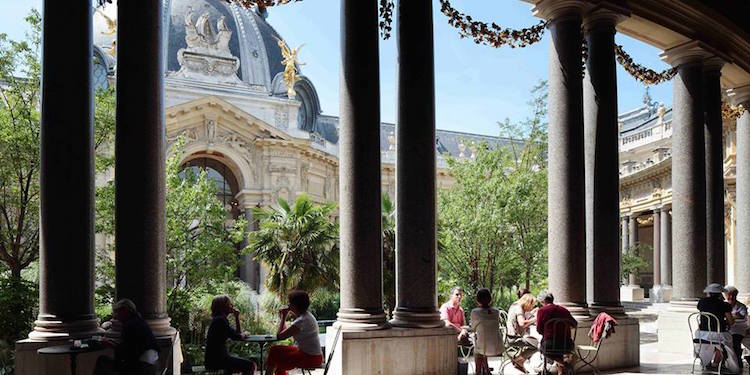 Arcade courtyard at the Petit Palais near the Champs-Élysées
The Champs-Élysées area, centered on the 8th arrondissement, is defined by wide boulevards, major landmarks, and a concentration of international brands. It provides a clear, structured layout with strong transport connections across Paris.
The setting is formal and busy, particularly along the main avenue, with quieter streets just beyond. It suits visitors who want immediate access to major sights and straightforward movement across the city, with a wide range of hotel categories.
Canal Saint-Martin
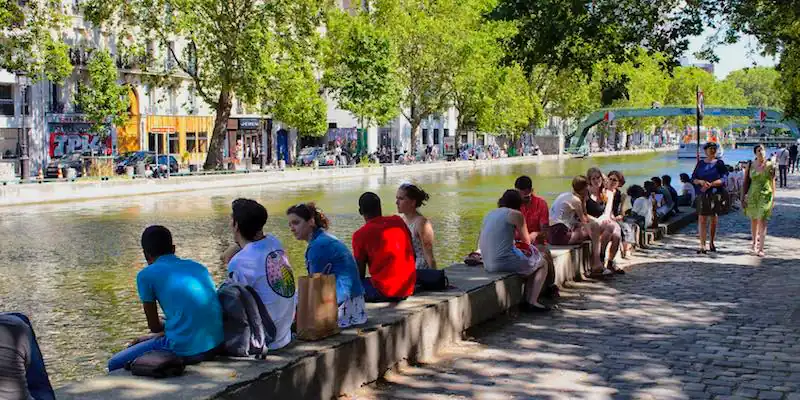 People relaxing along Canal Saint-Martin
Canal Saint-Martin runs through the 10th Arrondissement and into the 11th, lined with tree-shaded paths, footbridges, and a mix of older buildings and newer cafés. It sits slightly outside the main visitor areas but remains well connected by metro.
The pace is slower, with activity building in the late afternoon and evening. Dining and cafés tend to be smaller and more varied than in central districts. It suits visitors who prefer a less formal setting and do not need to be within immediate walking distance of major sights.
Montmartre
 Montmartre street with Sacré-Coeur rising above – photo Mark Craft
Montmartre rises in the 18th Arrondissement, with steep streets, small squares, and views across Paris. Its layout differs from the rest of the city, with a more irregular street pattern and a stronger sense of separation from central districts.
The setting is distinctive, with quieter streets, small squares, and views across the city. It suits visitors who value atmosphere and a sense of place, and who are comfortable using transport to reach central sights across Paris.
