


Musée Carnavalet – The Museum of Paris History
Musée Carnavalet – The Museum of Paris History
If you love Paris there's one museum you should not miss. It's extensive, it's newly renovated, it's the most Parisian of all the city's museums, and it's free. Musée Carnavalet is the museum of the history of Paris, with a collection that visually presents the life of the city from prehistory to the present. Something else that makes the museum attractive to the visitor is that it's housed in two historic Renaissance mansions in the Marais, Hôtel Carnavalet being one of them.
A Journey Through Time
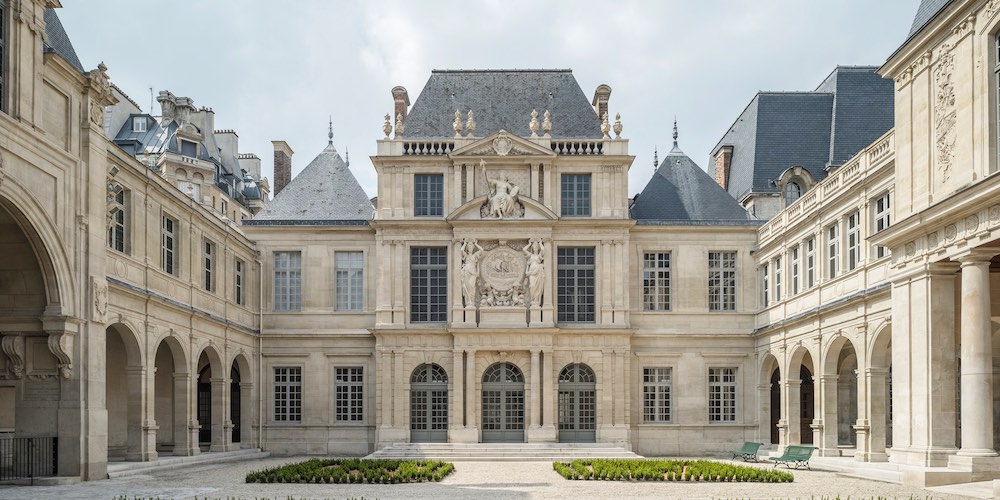 Courtyard at Musée Carnavalet, photo Musée Carnavalet
Hôtel Carnavalet was built in 1560 and saw expansion and renovation over the following centuries. History and literary buffs might know that Madame de Sévigné, writer, diarist and correspondent, lived here from 1677 to 1694. The transformation of the hôtel (we would say mansion) into the capital's history museum was part of the massive renovation of Paris by Baron Haussmann in the mid-nineteenth century.
Hôtel Carnavalet was purchased in 1866, but due to a few unforeseen difficulties — the Franco-Prussian War, the siege of Paris, and the Paris Commune — it wan't until 1880 that the museum opened. A century later (1989) the museum expanded into the neighboring mansion, Hôtel Le Peletier de Saint-Fargeau.
The latest stage in Musée Carnavalet's development was a thorough renovation and expansion that lasted from 2016 to 2021. More display areas were added, most notably in the basement, and displays were re-jigged to take the visitor on a chronological journey through the history of Paris, on a pathway of more than 1.5 kilometers through 100 rooms, starting in the basement and ending on the upper floors. Of course, visitors can wander wherever their interests take them, including an exploration of the revived courtyard gardens — one of the most beautiful terraces in Paris.
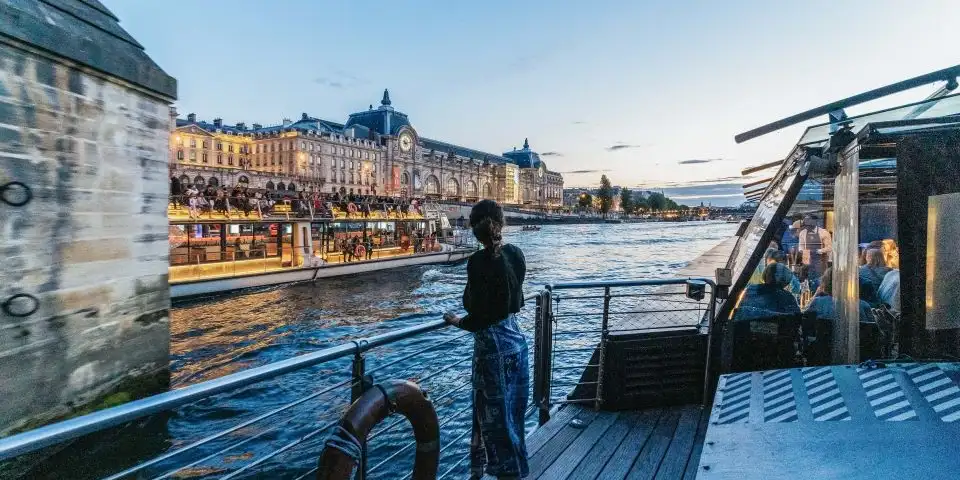
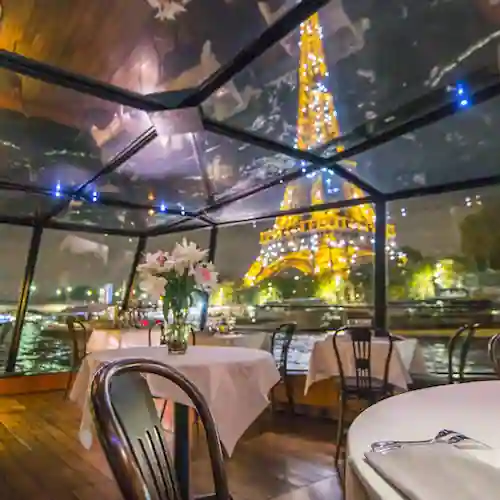
A Classic Seine Dinner Cruise
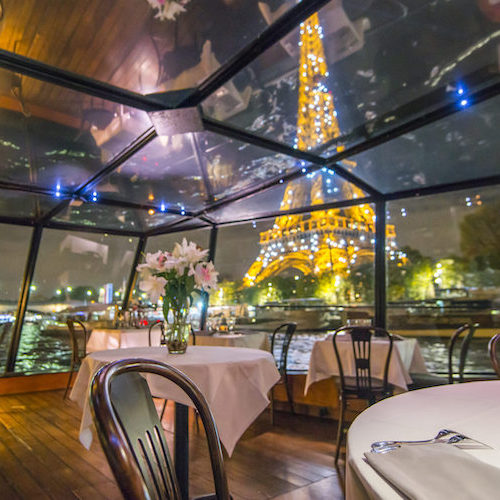
Dine on the Seine as Paris lights up around you, with French cuisine served aboard a glass-walled boat cruising past the Eiffel Tower, Notre-Dame, and Louvre.
Carnavalet's Thematic Sections
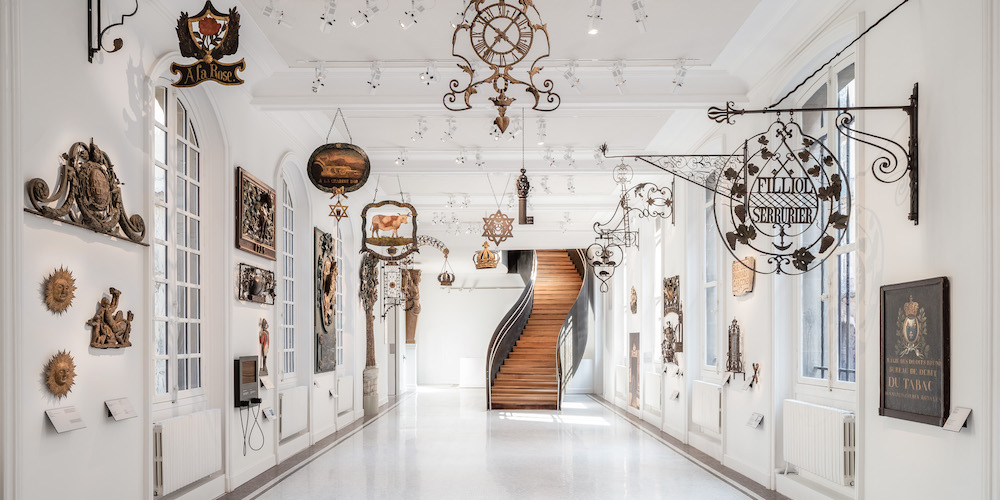 Entry to Musée Carnavalet is through the sign rooms, photo Musée Carnavalet
The collection of the museum is vast, something over 600,000 objects. To make sense of 2,000 years of history, the objects have been carefully curated and presented in successive thematic sections. You can follow the historic pathway suggested by the museum, or you can choose your own adventure among the areas that comprise the refreshed Musée Carnavalet.
Sign Rooms
The museum invites you to step into its historical setting as you walk through rooms adorned with signage from various shops and trades that once filled the streets of Paris over the centuries. It aims to transport you back in time and recreate the charming atmosphere of strolling along the Parisian streets during those bygone eras. Among the collection are numerous genuine signs and storefronts, such as a complete pharmacy store front that was saved and conserved in 1912 after nearly a hundred years of active service.

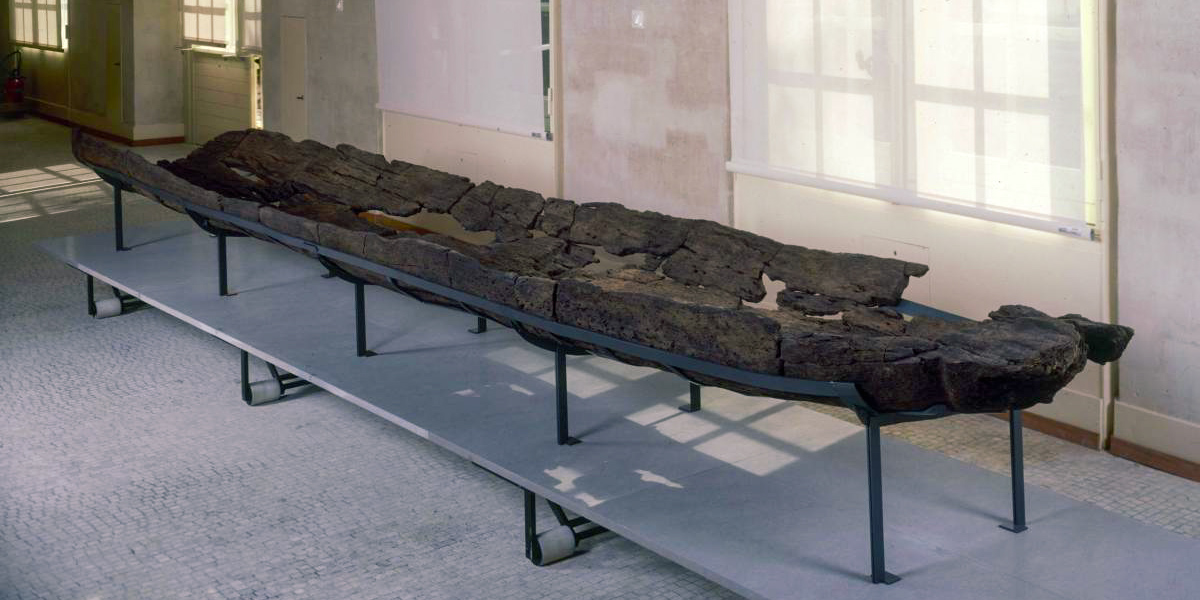 Prehistoric dugout canoe, photo Musee Carnavalet
Prehistory, Antiquity & the Middle Ages
Located in the newly-opened basement, where the chronological path begins, here you find the very oldest artifacts. One of the most fascinating pieces is a prehistoric dugout canoe made from a single piece of oak.
Middle Ages to the 16th Century
On the ground floor of the museum the historic periods are featured with displays illustrating the beginning of the modern era.
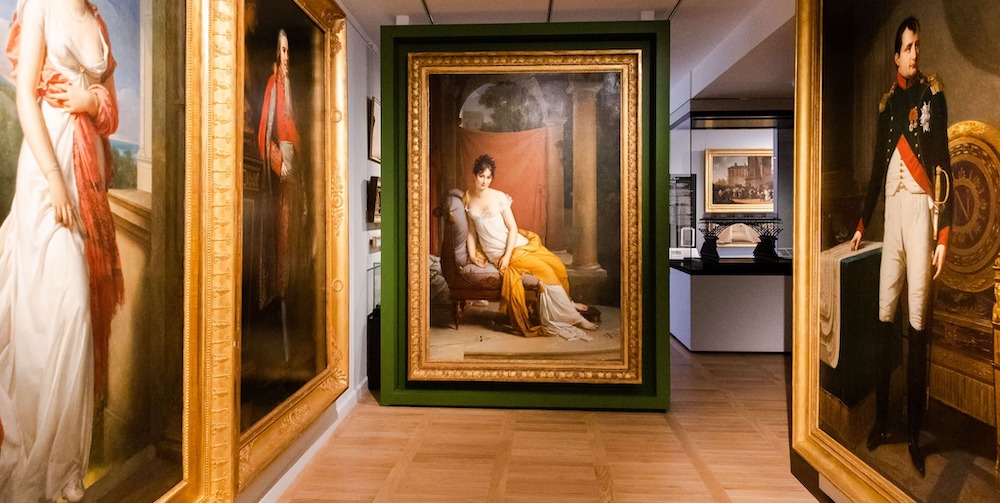 Paintings from the time of Napoleon, photo Musée Carnavalet
Choose Your Paris Adventure
Other thematic sections feature Napoleon, the 19th century, and modern Paris:
- Mid-16th Century To Late 18th Century
- The 18th Century
- The French Revolution and the Early 19th Century, including Napoleon and beyond
- Napoleon III and the The Haussmannian Transformation of Paris
- The Siege 0f Paris (1870 to 1871)
- The Paris Commune (1871)
- Late 19th Century to the 21st Century
- Belle Époque Paris
- Marcel Proust (1871-1922)
Versailles Day Trip From Paris
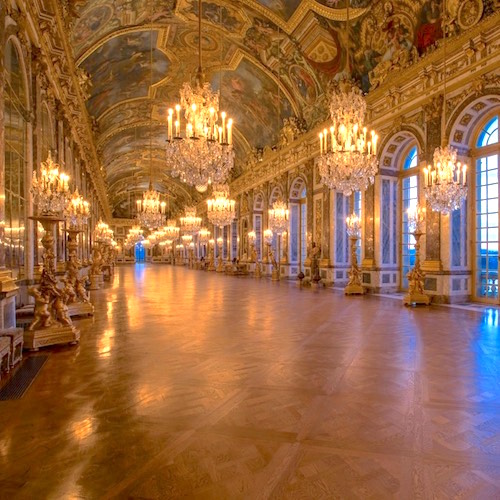
Step into Versailles with reserved access for gilded royal apartments and the Hall of Mirrors, then wander the vast gardens and Marie Antoinette's estate.
More Reasons to Visit Musée Carnavalet
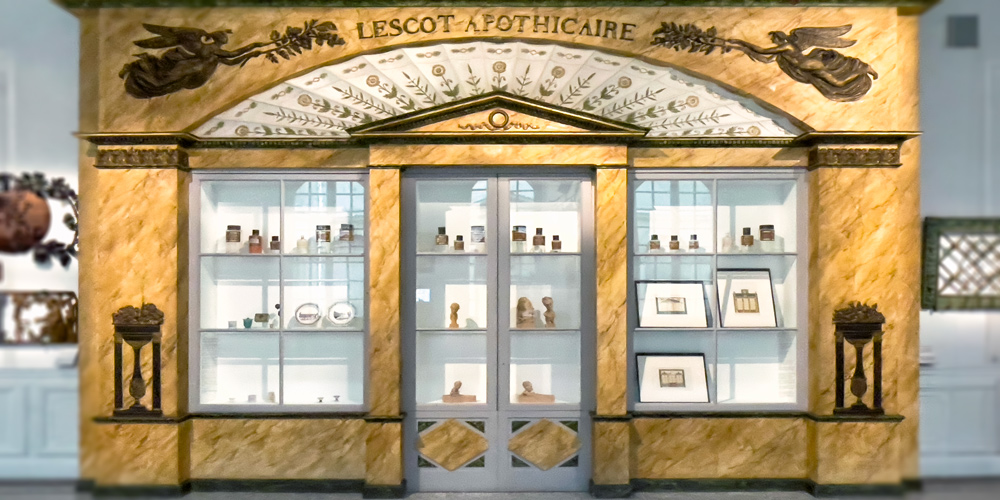 Preserved storefront at Musée Carnavalet, photo by Mark Craft
The historic museum fits right in the vibrant, bustling Marais neighborhood of Paris, though it remains a relatively hidden gem among the more well-known museums like the Louvre or d'Orsay. During our visit, we didn't have to deal with any long lines or wait times to enter — and did we mention, it's free?
The team that redesigned the museum worked hard to make it more family-oriented. There are now multiple displays at a child-friendly height, complete with easy-to-understand signs. Additionally, there are more explanations in English to cater to the growing global audience's interest.
If you want to truly experience the essence of Paris, we highly recommend visiting this underrated gem. And don't forget to take some time to relax in the café, located outdoors, where you can appreciate the beauty of the Jardin d'Olympe. Musée Carnavalet is a must-visit for anyone who truly loves Paris.
Day Trips From Paris
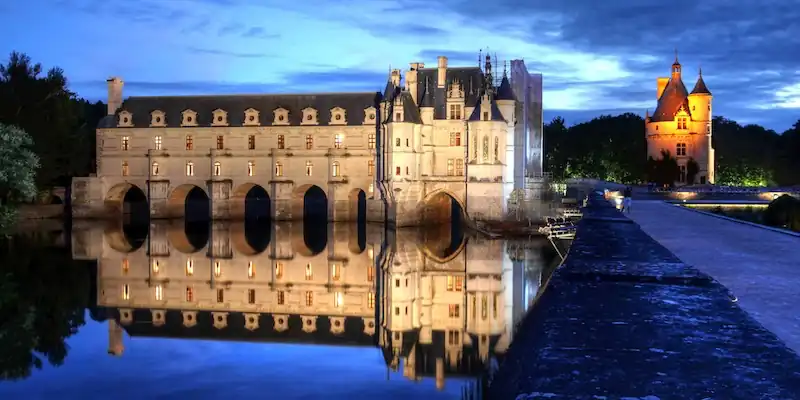
Just beyond Paris are royal chateaux, wine regions, medieval towns, and historic landmarks, all close enough to visit on a guided day trip from the city.
Les Jardins d'Olympe
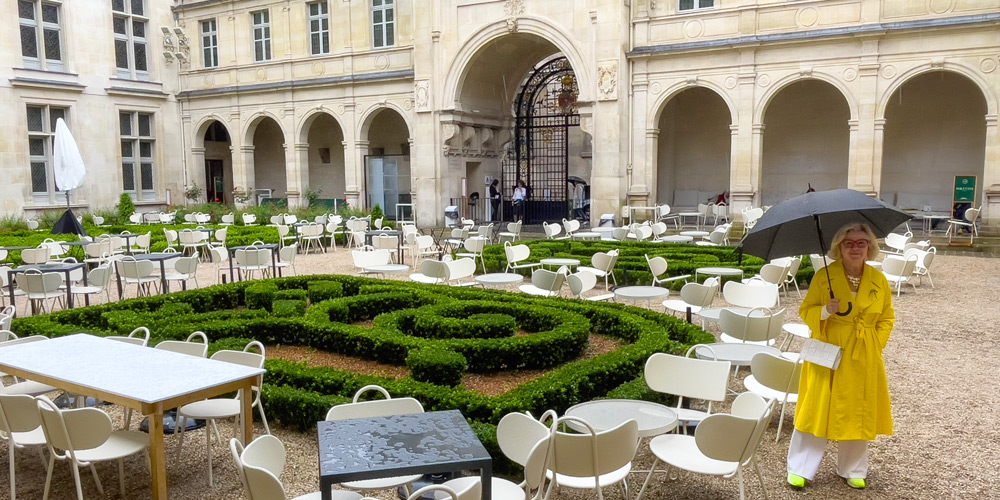 Musée Carnavalet's courtyard restaurant on a rainy day, photo by Mark Craft
The tranquil courtyard of the Musée Carnavalet has become a seasonal stage for short-term restaurant concepts. Over recent years, it has hosted pop-up dining experiences such as Les Jardins d’Olympe by Chef Chloé Charles and Fabula by Julien Dumas, each located beneath the ivy-clad façades of the 16th-century mansion. These temporary restaurants transform the museum’s gardens into elegant open-air dining venues that celebrate Parisian creativity each summer.
Musée Carnavalet Resources
- 23 rue de Sévigné, 75003
- Metro: St-Paul, Chemin Vert
- Open: 10:00 am to 6:00 pm
- Closed: Monday and public holidays
- Museum Website…
Paris Planning Guides
 Book an Airport Transfer
 |
 Left Bank Hotels
 |
 Visiting Versailles
 |
 Glorious Dinner Cruises
 |