








Navigating Paris by Taxi – A Guide to Getting Around the City
 Paris taxis are easy to use, but not always the fastest way across the city.
For most trips within central Paris, a taxi is not the fastest option, and it usually costs more than public transportation. Traffic, one-way streets, and short distances make the Metro or a straightforward walk the quicker way across the city.
Taxis are still useful at certain times. Late at night, with luggage, or for airport journeys, they provide a direct ride without transfers or stairs. This guide focuses on those moments — how to find one, what it costs, and when the Metro or an airport transfer is the better choice.
When A Taxi Makes Sense In Paris
paris-airport-transfers.html
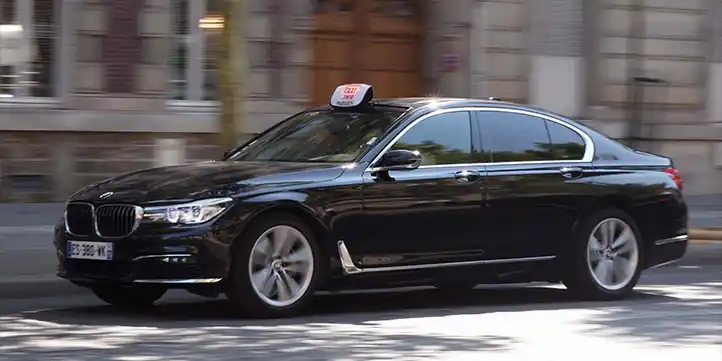 Traffic and one-way streets can slow taxis on short trips.
Taxis are most useful when you want a direct, door-to-door ride rather than changing trains or walking between stations. They work well for trips between hotels and train stations, and for short journeys where public transport involves stairs or multiple changes.
For most other trips, the Paris Metro is faster across the city. Airport journeys are the clearest exception. Instead of joining a taxi rank on arrival, the ride can be arranged in advance, with a driver meeting you inside the terminal and taking you directly into Paris.
Private Airport Transfers
 The driver handles the luggage and takes you directly into the city.
Arranging your airport transfer in advance makes arrival in Paris easier. The driver meets you inside the terminal, takes care of the luggage, and walks you directly to the car. There is no queue and no need to explain where you are going.
You settle into a comfortable car and head straight into the city, with the route and price already set. After a long flight, that quiet, direct ride is a welcome change. For early flights, late-night landings, or trips with luggage, it is the simplest way to reach your hotel.

Paris Airport Transfers To Your Hotel
Your arrival in Paris is easier when a driver is waiting at the terminal. Private airport transfers take you directly to your hotel, avoiding taxi lines after a long flight. Compare options now and reserve a ride before landing.
How To Find a Taxi
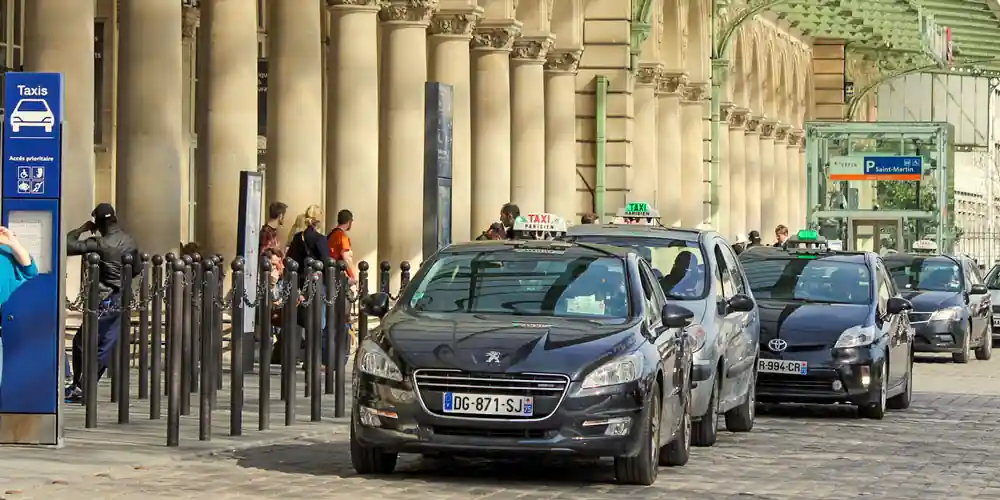 Taxi ranks are the most reliable place to find a car in busy areas.
You can take a taxi from a rank, hail one on the street, or book in advance. Taxi ranks are the most reliable option in central areas and near major stations. A green light on the roof means the taxi is available; a red light means it is occupied or reserved.
Booking through an app is the most reliable way to get a taxi outside busy areas or at night. Official taxis can be reserved through apps such as Free Now and G7 Taxi, which allow you to confirm pickup times and track the driver. Hotels and restaurants can also arrange taxis, though this may involve a short wait.
Taxi Fares & Fixed Prices
Paris taxis use meters for most journeys, with a base fare, distance charge, and time component when traffic slows. Rates vary slightly by time of day, but the system is standardized and displayed inside the car. Fares are not negotiated within the city, and official details are published by the French government.
Airport trips use fixed prices, which removes uncertainty. From central Paris, expect about €53 to €58 between the city and Charles de Gaulle Airport, and about €32 to €37 to or from Orly Airport, depending on where you are located in Paris (Life Bank or Right Bank) These flat rates include luggage, with only very few extra charges such as advance bookings or additional passengers.
What To Expect During The Ride
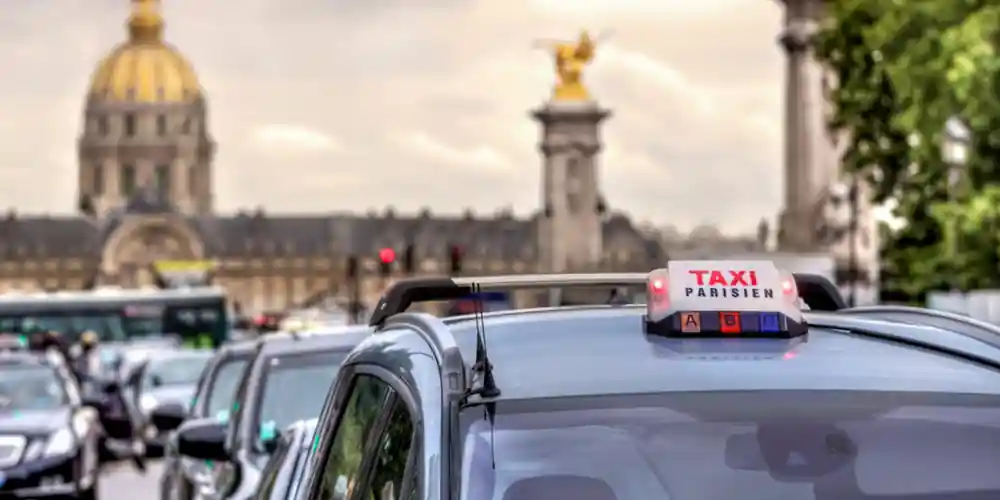 Taxi routes follow the street network, so traffic and one-way streets can affect the journey.
Taxis in Paris follow a set structure. The meter starts when the journey begins; drivers follow the street network and adjust for traffic Card payments are accepted, and taxis are required to carry a working payment terminal. Contactless payment is standard, and receipts are available on request.
Tipping is not required, but rounding up the fare or adding a small amount is common for a smooth ride. Drivers generally speak some English, though not always, so having the address written down can help. Seat belts are expected, and short trips are accepted.

Find Your Paris Hotel: Choosing The Right Area
Paris hotels book up fast, and a good location saves time every day. This search pulls together 4- and 5-star stays with strong reviews across key neighborhoods, so you compare options quickly and book with confidence.
Uber & Ride Apps In Paris
Ride apps operate alongside the taxi system. Uber is the most familiar, with options that range from standard cars to higher-end vehicles. Local taxi apps such as G7 Taxi use licensed drivers and connect directly to the regulated taxi fleet.
Apps show the fare in advance and allow you to confirm the ride before pickup. Payment is automatic via the app. Taxis use meters within the city but follow fixed pricing for airport routes. The difference is pricing and booking. Apps show the fare in advance and confirm the ride before pickup.
Practical Tips For Using Taxis In Paris
- Taxi roof light: Green means available; red means the taxi is occupied or booked.
- Taxi ranks: The most reliable place to find a taxi in busy areas, especially near stations and major hotels.
- Fares: Trips inside Paris are metered. Airport trips use fixed rates.
- Payment: Card and contactless payments are standard.
- Short trips: Drivers are expected to accept them, including within central neighborhoods.
- Address: Have the destination ready to show the driver, especially for small hotels, restaurants, or side streets.
- Timing: Allow extra time during rush hour, when traffic can slow even short rides.
- Late night: Taxis are often the simplest option after Metro service slows down.
- Airport Transfer: For service between the airport and your hotel a private transfer is recommended.
When Not To Use A Taxi
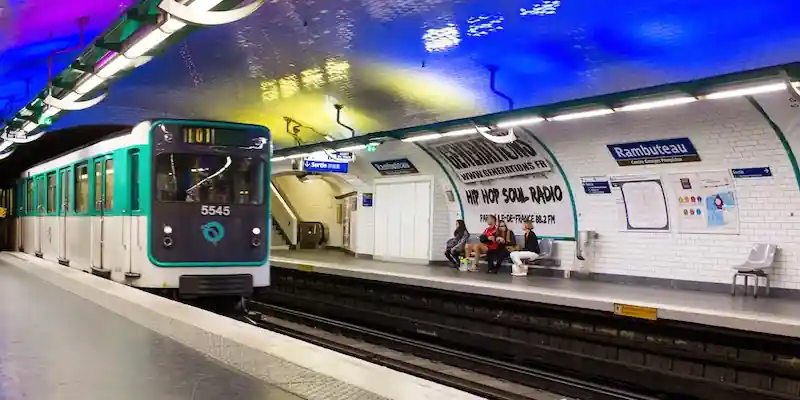 The Metro moves quickly across the city and avoids street traffic.
For short trips in central Paris, the Metro or a straightforward walk is usually quicker. Traffic and one-way streets slow even simple routes, while trains run directly between stations.
For longer journeys, the Metro and RER cross the city quickly and avoid traffic altogether. During the day, a taxi is best used only when you need a door-to-door ride. Our guide to Paris Metro tickets explains how the system works.

A Classic Seine Dinner Cruise
A dinner cruise is one of the easiest ways to see Paris lit up at night without racing across town. This 2.5-hour cruise serves classic French cuisine on an all-glass boat, so the views stay with you as the landmarks slide by.