







Chatelet-Les Halles Paris – Plaza, Theaters, Metro
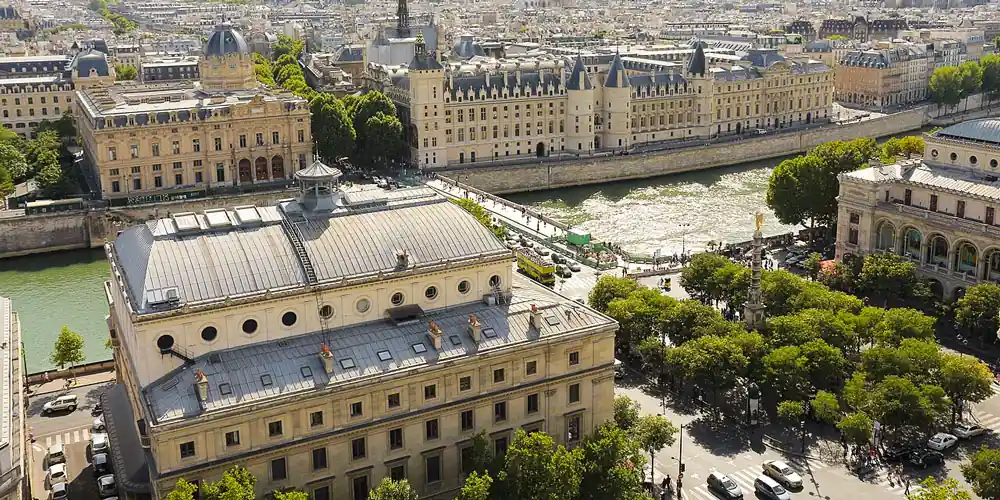 Place du Châtelet with its two theaters, photo Wikimedia by J-C Windland
Chatelet-Les Halles in Paris sits pretty much in the middle of everything. “Châtelet” is the elegant square and theatre; “Châtelet–Les Halles” is the sprawling Metro/RER hub underneath and the busy neighborhood swirling around it.
It's where metro lines collide, grand 19th-century theaters face off across a busy square, and the Seine is just steps away. For visitors, this central crossroads makes an excellent launchpad for Seine River cruise, the Louvre Museum, Notre-Dame, and riverside strolls along the quais.
History of Place du Châtelet
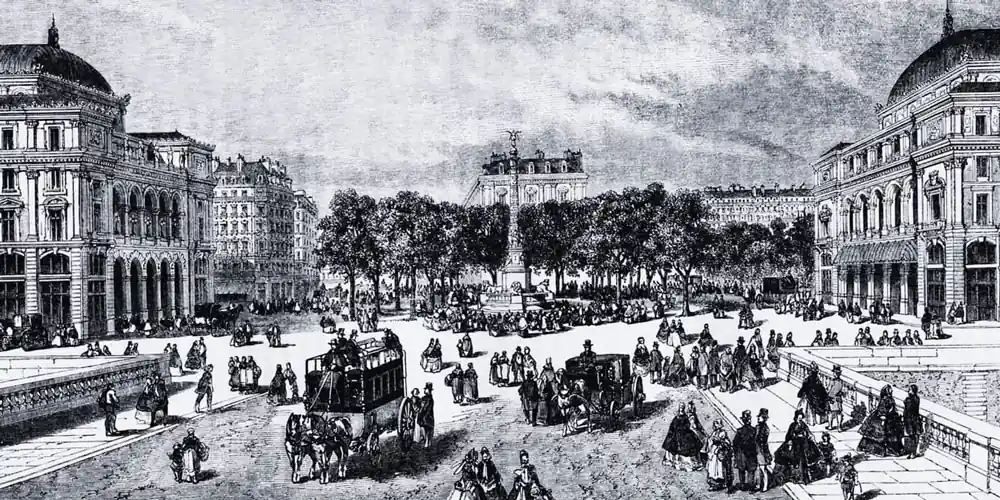 Place du Châtelet & the theaters in a 19th-century engraving
The name Châtelet comes from a fortress — a medieval bruiser called the Grand Châtelet. King Louis VI built it in stone in about 1130 to guard the northern entrance to the city at Pont au Change. Picture a solid, almost square stronghold surrounded by deep ditches filled with water from the Seine. Two towers flanked the corners facing the suburbs, and the whole thing was designed to say, "Don't even think about it."
For centuries, the Grand Chatelet served as police headquarters, law court, and prison. Executions happened here. Criminals were held here. It was grim. When Philip Augustus built his famous wall around Paris in the late 12th century, the fortress was absorbed into the city's defenses and shifted to administrative duties. It was rebuilt under Charles V in the 15th century and again under Louis XIV in 1684.

By the time of the Revolution, the fortress had outlived its usefulness and its reputation was thoroughly dark. Napoleon ordered the whole thing torn down between 1802 and 1810, and in its place rose the public square you see today.
The Fontaine du Palmier — that tall column topped with a gilded Victory — went up in 1808 to celebrate Napoleonic military triumphs. Bronze lions guard the base. The fountain became the centerpiece of a new civic space, surrounded by wide streets and, eventually, a pair of grand theaters. Today, Place du Chatelet hums with buses, taxis, and pedestrians crossing between the Seine and the busy streets of the Right Bank. It's loud, it's chaotic, and it's unmistakably Parisian.
The Twin Theaters of Châtelet
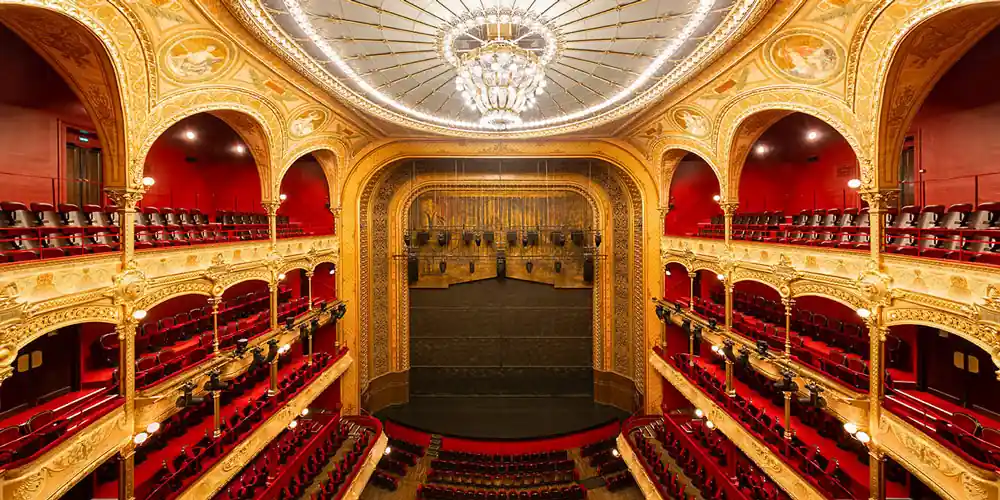 The interior of Theatre du Chatelet
Standing on opposite sides of Place du Châtelet are two nearly identical theaters, both built in the 1860s as part of Baron Haussmann's grand redesign of Paris. The symmetry is deliberate — and undeniably dramatic. These two playhouses have been staring each other down for over 160 years.
Theatre du Châtelet, on the west side, opened in 1862 under the name Cirque Imperial. It was built because Haussmann demolished the company's original venue during his urban rampage through the old streets of Paris.
The new theatre became famous for staging lavish spectacles, including an astonishing 64-year run of Jules Verne's Around the World in 80 Days — over 2,000 performances, ending only with the Nazi occupation in 1940. Today the theatre focuses on musicals, dance, and orchestral concerts, with seating for over 2,000.
For visitors, the sweet spot is the balcony and first gallery: you usually get a good view of the stage and the gorgeous interior without paying top-tier prices. Bring a light layer — older Paris theaters can be strangely warm one night and chilly the next. The bar is convenient but not cheap, so think about a pre- or post-show drink at a nearby cafe instead.
Across the square, Théâtre de la Ville started life as Theatre Lyrique. In its early years it premiered works by Bizet, Berlioz, and a lesser-known composer named Charles Gounod. Those were serious debut seasons.
In 1899 the theatre took on a new leading lady offstage as well as on: Sarah Bernhardt. She ran the house, renamed it Théâtre Sarah-Bernhardt, and stamped her personality on it for nearly two decades. During the German Occupation the authorities stripped her name from the facade because she was Jewish and rebadged it Théâtre de la Cité until 1947. The modern Théâtre de la Ville–Sarah Bernhardt restores her name to its rightful place.
Today it's a hub for contemporary dance, world music, and avant-garde performance. The programming can be adventurous — this is where Paris goes to see the unexpected. Choosing between the two venues, Châtelet is one of the best spots in Paris to catch a show; check listings before your Paris arrival because there's usually something worth seeing.
Things to Do Near Châtelet
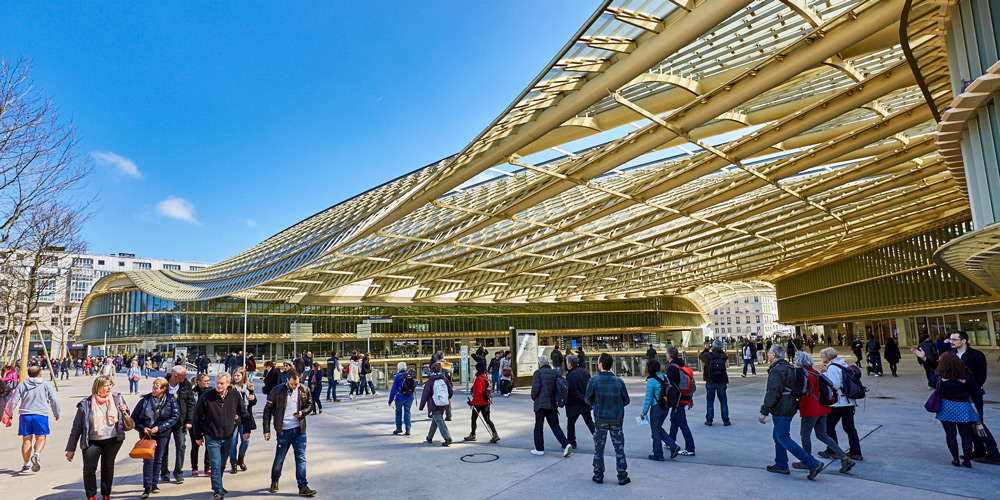 Les Halles today, covered by La Canopée, photo Wikimedia by Zoeuniball
Châtelet-Les Halles Paris puts you within easy walking distance of a ridiculous number of attractions — and we mean ridiculous. Head south across Pont au Change and you're on Île de la Cité, home to Notre-Dame and the jewel-box brilliance of La Sainte-Chapelle. Walk east and you hit The Marais, crammed with boutiques, falafel joints, galleries, and historic mansions. Go west and the Louvre Museum is barely ten minutes on foot.
Closer to the Metro station, Forum des Halles is a sprawling underground shopping mall topped by a curving glass canopy. It's not charming, but it's practical for rainy-day browsing, fast food, or grabbing basics. Above ground, the pedestrian streets around Les Halles are packed with cafes, chain stores, and the occasional independent gem worth hunting down.
In the evening, the quais along the Seine make for a perfect post-dinner stroll. The bridges glow, Île de la Cité shimmers ahead, and in summer, picnickers line the riverbanks with wine bottles and baguettes. It's free, it's beautiful, and it's right there.
Using the Metro at Châtelet
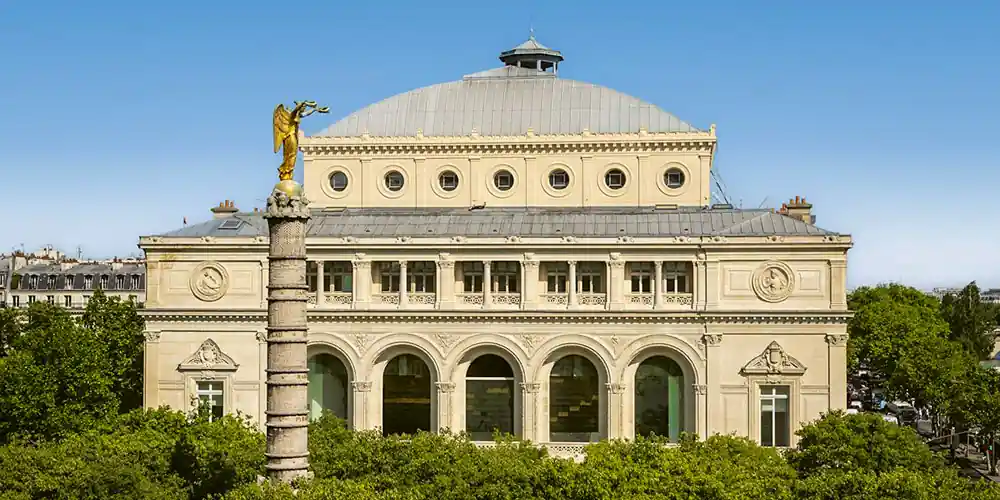 Théâtre de la Ville–Sarah Bernhardt above the trees, photo Théâtre de la Ville
Châtelet-Les Halles is one of the busiest transit hubs in Europe, and stepping into it for the first time can feel like entering a small underground city. The station connects Metro lines 1, 4, 7, 11, and 14, plus RER lines A, B, and D. Translation: you can get almost anywhere in Paris or its suburbs from here.
The trick is to follow the color-coded signs and allow extra time. Transfers between the far ends of the station — say, from Line 7 at Châtelet to the RER platforms at Les Halles — can take a solid ten minutes of walking through tunnels. Avoid rush hour if possible, and don't panic. Everyone gets briefly lost here at least once. It's busy, it's confusing, but it works. And once you've mastered it, you'll feel like a proper Parisian.
Châtelet-Les Halles Paris FAQs
IS CHÂTELET A GOOD AREA TO STAY IN PARIS?
Absolutely. It's super central, with easy metro and RER access to every major sight. Hotels here tend to be mid-range, and the neighborhood buzzes day and night. Just don't expect peace and quiet — this is the heart of the city.
WHAT IS THERE TO SEE AT PLACE DU CHÂTELET?
The Fontaine du Palmier with its gilded Victory statue, two grand 19th-century theaters, views toward the Seine and Île de la Cité, and a constant swirl of Parisian street life.
HOW FAR IS CHÂTELET FROM THE SEINE AND NOTRE-DAME?
About two minutes' walk to the river, and five minutes across Pont au Change to Île de la Cité and Notre-Dame Cathedral. You're basically there before you know it.
IS CHÂTELET WORTH VISITING IF I'M NOT STAYING NEARBY?
Yes. Even if your hotel is in another district, Place du Châtelet is worth a visit for the theaters, quick access to the Seine, easy walks to the Marais and the Louvre, and the sheer buzz of the square and surrounding streets.
Continue Your Paris Adventure
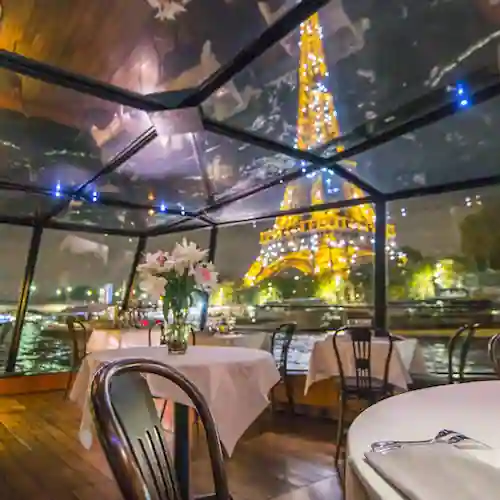
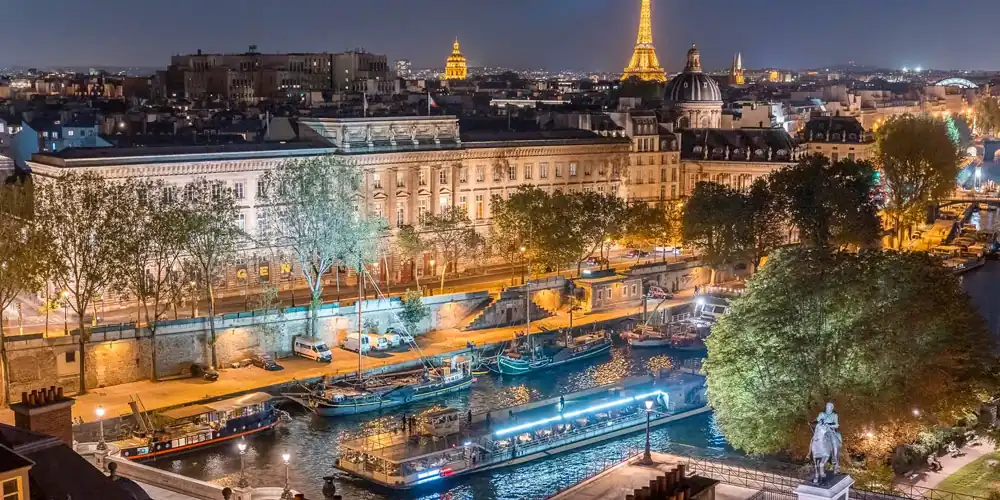 Book an evening dinner cruise along the Seine
Ready to make a visit to Châtelet part of a perfect day? These experiences complete the day.
🎨 Skip-the-Line Louvre Masterpiece Tour →
🗼 VIP Tours of the Eiffel Tower →
🚢 Toast Paris on a Seine River Dinner Cruise →
👑 A Royal Day at Versailles →
⚜️ City of Paris Website: News & Happenings →
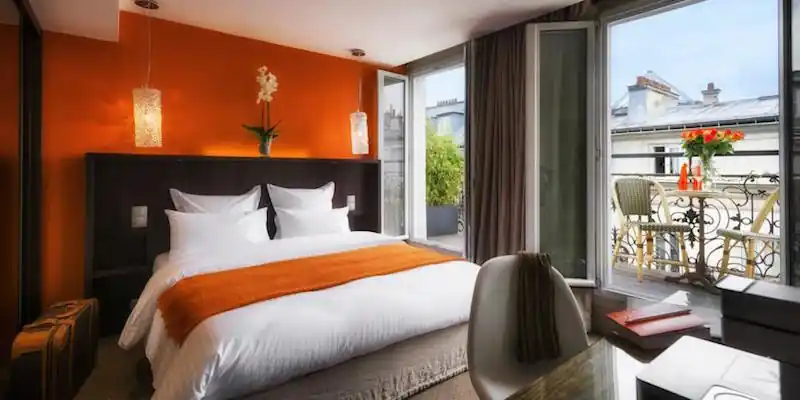
Find Your Paris Hotel: Choosing The Right Area
Wake up near the cafés of Saint-Germain, the streets of the Marais, or the village lanes of Montmartre. Find a Paris hotel in the neighborhood you want to call home.